
- Trainer/in: Laurenz Schneider
- Trainer/in: Simal Köseoglu
- Trainer/in: Tom Noth
- Trainer/in: Joachim Winter
- Trainer/in: Marie Spörk
- Trainer/in: Fabian Waldinger
- Trainer/in: Hannah Fuß

Microeconomics analyzes the economic behavior of households and firms and explains how markets in which households and firms interact work. The lecture introduces the fundamentals of the field, provides an overview of further topics that are explored in greater depth in other lectures, and is intended to spark your interest in economics.
- Trainer/in: Carlos Romero Blázquez
- Trainer/in: Henning Schatz
- Trainer/in: Klaus Schmidt


Microeconomics analyzes the economic behavior of households and firms and explains how markets in which households and firms interact work. The lecture introduces the fundamentals of the field, provides an overview of further topics that are explored in greater depth in other lectures, and is intended to spark your interest in economics.
- Trainer/in: Evelina Griniute
- Trainer/in: Klaus Schmidt
- Trainer/in: Clemens Scholz
- Trainer/in: Christina Borner
- Trainer/in: Uwe Sunde
- Trainer/in: Carlo Cignarella
- Trainer/in: Filippo Cornolò
- Trainer/in: Andreas Haufler
- Trainer/in: Ignacio Pedrosa Marco
- Trainer/in: Maximilian Sadowski
- Trainer/in: Gabriel Sanchez Hernandez
- Trainer/in: Lara Andermann
- Trainer/in: Christina Meyer
- Trainer/in: Lasse von der Heydt Freiherr von Massenbach
- Trainer/in: Joachim Winter
- Trainer/in: Marco Hilger
- Trainer/in: Christina Meyer
- Trainer/in: Tom Noth
- Trainer/in: Andrew Proctor
- Trainer/in: Xuan Teng
- Trainer/in: Derya Uysal Ertan
- Trainer/in: Lasse von der Heydt Freiherr von Massenbach
- Trainer/in: Joachim Winter
- Trainer/in: Daniel Barabas
- Trainer/in: Valeria Burdea
- Trainer/in: Maximilian Breu
- Trainer/in: Anna Brückner
- Trainer/in: Nadiia Ivasiuk
- Trainer/in: Theresa Brandl
- Trainer/in: Maximilian Gödl
- Trainer/in: Jonas Löbbing
- Trainer/in: Clemens Scholz
- Trainer/in: Freya Cook
- Trainer/in: Henning Schatz
- Trainer/in: Arthur Seibold
- Trainer/in: Jacqueline Adelowo
- Trainer/in: Jean-Victor Alipour
- Trainer/in: Oke Carstens
- Trainer/in: Ingrun Clement
- Trainer/in: Felix Knau
- Trainer/in: Yannick Knieriemen
- Trainer/in: Noah Lustermann
- Trainer/in: Chiano Patti
- Trainer/in: Hannah Von Bergmann
- Trainer/in: Freya Cook
- Trainer/in: Arthur Seibold
- Trainer/in: Lea Best
- Trainer/in: Mirko Wiederholt
- Trainer/in: Daniel Bursian
- Trainer/in: Sebastian Schirner
- Trainer/in: Erik Stoppenbrink

- Trainer/in: Valeria Burdea
- Trainer/in: Klaus Schmidt
- Trainer/in: Federico Proverbio
- Trainer/in: Mirko Wiederholt
- Trainer/in: Matteo Dalle Luche
- Trainer/in: Karl Schulz
- Trainer/in: Lodovico Lanzone
- Trainer/in: Jonas Löbbing
- Trainer/in: Juliette Fournier
- Trainer/in: Hoda Aboushanab
- Trainer/in: Matteo Dalle Luche
- Trainer/in: Andreas Roider
- Trainer/in: Aaron Günther
- Trainer/in: Luisa Lorenz
- Trainer/in: Stefan Smutny
- Trainer/in: Buse Caba
- Trainer/in: Sofia Gómez Sánchez
- Trainer/in: Maddalena Totarelli
- Trainer/in: Katharina Wedel
- Trainer/in: Juliette Fournier
- Trainer/in: Peter Zorn
- Trainer/in: Niklas Potrafke
- Trainer/in: Lukas Puschnig
- Trainer/in: Raphael Brade
- Trainer/in: Ludger Wößmann
In an increasingly interconnected world economy, this course applies the tools of public economics and game theory to interactions among sovereign states. It analyzes the strategic behavior of governments, studies cooperative and non-cooperative policy interactions, characterizes equilibrium outcomes, and evaluates them from a welfare perspective. Topics include, among others, international public goods, optimal tariffs, strategic trade policy, and tax competition.
- Trainer/in: Sven Simon
- Trainer/in: Davide Cantoni
- Trainer/in: Tao Chen
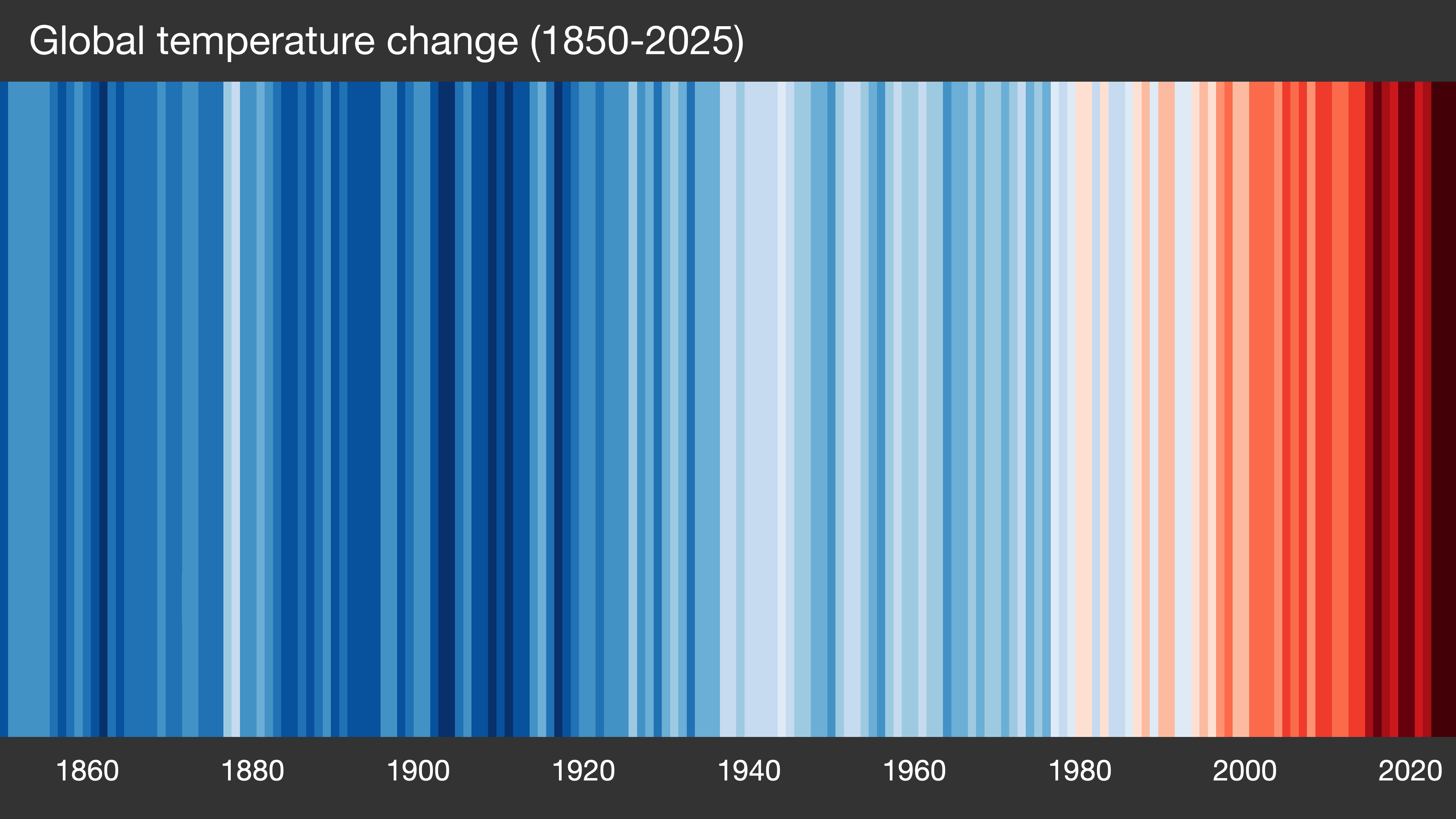
This advanced seminar explores the macroeconomic dimensions of climate change, with a focus on long-term growth, policy design, and risk assessment. Students will engage with cutting-edge research to learn how to formulate, analyze, and draw policy insights from climate-related macroeconomic problems. The course emphasizes applied macroeconomic modeling and the use of integrated assessment models (IAMs) to evaluate the economic impacts of climate change, carbon pricing, and mitigation strategies under uncertainty.
- Trainer/in: Aleksandra Friedl
- Trainer/in: Julian Detemple
- Trainer/in: Johannes Könemann
- Trainer/in: Yutaka Makabe
- Trainer/in: Margarita Gatsou
- Trainer/in: Uwe Sunde
- Trainer/in: Mathias Bühler
- Trainer/in: Beatrice Baaba Tawiah
- Trainer/in: Andrew Proctor
This course covers modern methods of estimation and inference in econometrics. Topics include maximum likelihood and pseudo-maximum likelihood estimation, the (generalized) method of moments, instrumental variables, simulation-based methods (simulated likelihood and method of simulated moments, bootstrap), non- and semiparametric estimation, and an introduction to machine learning with a focus on Lasso and Ridge regression. The course gives students the theoretical background for further courses in econometrics and for empirical research. Tutorials combine theoretical exercises with empirical applications in R.Prerequisites: introductory econometrics, basic probability theory and linear algebra.
Tentative Outline
- Introduction
- Maximum Likelihood and Pseudo-Maximum Likelihood
- Method of Moments and GMM
- Instrumental Variables
- Simulation-Based Methods
- Non- and Semiparametric Estimation
- Machine Learning Basics: Lasso and Ridge Regression
Literature
- Cameron, A.C. and Trivedi, P.K. (2005): Microeconometrics: Methods and Applications. Cambridge: Cambridge University Press.
- Hansen, B.E. (2022): Econometrics. Princeton: Princeton University Press. (A free manuscript version is available at www.ssc.wisc.edu/~bhansen/econometrics.)
- Hastie, T., Tibshirani, R. and Friedman, J. (2009): The Elements of Statistical Learning, 2nd ed. New York: Springer.
- Wooldridge, J.M. (2010): Econometric Analysis of Cross Section and Panel Data, 2nd ed. Cambridge, MA: MIT Press.
- Trainer/in: Derya Uysal Ertan
- Trainer/in: Daniel Bursian
- Trainer/in: Christopher Busch
Examenskurs VWL I: Geldpolitik, Mikro- & Makroökonomik
Der Examenskurs VWL I wird im WS 2026/27 ausnahmsweise bereits vor dem offiziellen Vorlesungsbeginn des Wintersemesters stattfinden.
Folgende Termine sind geplant:
|
Freitag, |
11. September |
13:00-18:00 Uhr |
Leopoldstr. 13, H3, 3232 |
|
Samstag, |
12. September |
09:00-16:15 Uhr |
Leopoldstr. 13, H3, 3232 |
|
Montag, |
14. September |
11:00-12:30 Uhr |
online via Zoom |
|
Montag, |
21. September |
11:00-12:30 Uhr |
online via Zoom |
|
Montag, |
28. September |
11:00-13:15 Uhr |
online via Zoom |
|
Freitag, |
23. Oktober |
08:30-12:30 Uhr |
online via Zoom |
Die angegebenen Zeiten verstehen sich als s.t.-Angaben.
Eine Anmeldung zum Kurs ist nicht erforderlich. Bitte beachten Sie, dass die Präsenzveranstaltungen ausschließlich vor Ort stattfinden und nicht gestreamt werden.
Alle Materialien zum Kurs finden Sie im Moodle-Kurs. Einschreibeschlüssel: VWL1!
- Trainer/in: Jasmin Denner, geb. Diemer
- Trainer/in: Philipp Brewing
- Trainer/in: Claudia Pilizota
- Trainer/in: Claudia Steinwender
- Martina Magli : Martina Magli
- Trainer/in: Julian Detemple
- Trainer/in: Evelina Griniute
- Trainer/in: Yutaka Makabe
- Trainer/in: Daniela Olea Suarez
- Trainer/in: Davide Cantoni
- Trainer/in: Tao Chen
- Trainer/in: Marie-Caroline Ellmauer
- Trainer/in: Moritz Leitner
- Trainer/in: Andreas Haufler
- Trainer/in: Leyi Tu
- Trainer/in: Lara Andermann
- Trainer/in: Mathias Bühler
- Trainer/in: Tao Chen
- Trainer/in: Marie-Caroline Ellmauer
- Trainer/in: Christina Meyer
- Trainer/in: Joachim Winter