
Technology-Enhanced Learning (TEL) describes the integration or application of technologies in the context of teaching and learning.
This master lecture gives an overview of e-learning topics from the perspective of computer science. General didactic scenarios and learning theories are discussed first. Based on this theoretical basis, tools, platforms, architectures and standards as well as special use cases (e-assessment, mobile learning, collaborative learning and the like) are covered. Furthermore, related non-technical aspects such as organization, rights, business models, etc. are discussed.
The lecture will be held in presence.
Enrollment key: TEL_26
Form of examination: Written (or oral) examinations
- المعلم: Armin Egetenmeier
- المعلم: Sigrid Klinger
- المعلم: Elisabeth Mayer
- المعلم: Thomas Odaker
Enrollment Key: VerParProg 26/27
The course deals with mostly automatic verification approaches for multi-threaded programs with shared memory. Topics of the course are:
- Semantics of parallel programs, e.g., interleaving semantics
- Static and dynamic approaches for data race detection
- Techniques for deadlock detection
- Verification of program properties (e.g., with sequentialization, bounded model checking, etc.)
- Partial Order Reduction
- Thread-modular verification
At the end of the course, students can name a number of techniques for the verification of parallel programs, especially in the area of data race and deadlock detection as well as for verification of safety properties. They should be able to explain the underlying formalisms of the techniques, to describe the work flow of the different techniques, and to apply the techniques on examples. Moreover, the students know the strengths and weaknesses of the techniques.
Literature
Program Semantics
- K. R. Apt, F. S. de Boer, E.-R. Olderog: Verification of Sequential and Concurrent Programs. Springer 2009.
Data Race Detection
- S. Savage, M. Burrows, G. Nelson, P. Sobalvarro, T. E. Anderson: Eraser: A Dynamic Data Race Detector for Multi-Threaded Programs. SOSP 1997.
- E. Poznianski, A. Schuster: Efficient On-the-Fly Data Race Detection in Multithreaded C++ Programs. IPDPS 2003.
- C. Flanagan, S. N. Freund: FastTrack: efficient and precise dynamic race detection. PLDI 2009.
Deadlock Detection
- Dawson R. Engler, Ken Ashcraft: RacerX: effective, static detection of race conditions and deadlocks. SOSP 2003.
- Mayur Naik, Chang-Seo Park, Koushik Sen, David Gay: Effective static deadlock detection. ICSE 2009.
Sequentialization
- Akash Lal, Thomas W. Reps: Reducing Concurrent Analysis Under a Context Bound to Sequential Analysis. CAV 2008.
- Omar Inverso, Ermenegildo Tomasco, Bernd Fischer, Salvatore La Torre, Gennaro Parlato: Bounded Model Checking of Multi-threaded C Programs via Lazy Sequentialization. CAV 2014.
Bounded Model Checking
- L. C. Cordeiro, B. Fischer: Verifying multi-threaded software using SMT-based context-bounded model checking. ICSE 2011
Thread-modular Verification
- C. Flanagan, S. N. Freund, S. Qadeer: Thread-Modular Verification for Shared-Memory Programs. ESOP 2002
Partial Order Reduction
- D. Peled: Partial-Order Reduction. Handbook of Model Checking 2018.
- P. Godefroid, D. Pirottin: Refining Dependencies Improves Partial-Order Verification Methods (Extended Abstract). CAV 1993.
- P. Godefroid, P. Wolper: Using Partial Orders for the Efficient Verification of Deadlock Freedom and Safety Properties. Formal Methods in System Design 2(2) 1993.
Atomicity Checking
- C. Flanagan, S. N. Freund: Atomizer: a dynamic atomicity checker for multithreaded programs. POPL 2004
- المعلم: Marie-Christine Jakobs
- المعلم: Márk Somorjai
The notion of uncertainty is of major importance in artificial intelligence (AI) and machine learning, and constitutes a key element of modern AI methodology. In line with the statistical tradition, uncertainty has long been perceived as almost synonymous with standard probability. Yet, due to the steadily increasing relevance of AI and machine learning for practical applications and related issues such as safety requirements, more general formalisms and methodologies have been recognized as viable alternatives and reasonable extensions.
This lecture provides an introduction to the main approaches to modeling and reasoning about uncertainty in AI and machine learning. This includes classical probabilistic methods such as graphical models (Bayesian networks) but also generalized uncertainty calculi such as evidence theory and imprecise probabilities. The use of corresponding methods for different types of problems in AI and machine learning, such as uncertainty quantification in supervised learning and predictive modeling, will also be addressed.
| Schedule | Location | Instructor | |
|---|---|---|---|
| Lecture | Tuesday, 16:15 - 17:45 | Geschw.-Scholl-Pl. 1, M 110 | Prof. Dr. Eyke Hüllermeier |
| Exercise A | Thursday, 14:15 - 15:45 | Edmund-Rumpler-Str. 9, A081 | Paul Hofman |
| Exercise B | Friday, 16:30 - 18:00 | Geschw.-Scholl-Pl. 1, M 001 | Paul Hofman |
The enrollment key is: Bernoulli
In case of questions, please contact p.hofman@lmu.de.
- المعلم: Paul Hofman
- المعلم: Eyke Hüllermeier
Diese Vorlesung findet im Wintersemester 2026/2027 leider nicht statt.
- المعلم: Jonas Stein

Summary: This course deals with applying formal methods for reasoning about programs to low-level code (such as x86 machine code) to find bugs, prove their absence, or simply gain more information about software (reverse engineering).
Topics we intend to cover include:
- Executable formats and machine code
- Disassembly and decompilation
- Classic dataflow analysis, theory and practice
- Recovering control flow
- Fuzzing (mutation-based, grammar-based)
- Debugging and dynamic binary instrumentation
- Taint analysis and symbolic execution
Enrolment key: I<3Messi
- المعلم: Sebastian Eckl
- المعلم: Matías Gobbi
- المعلم: Johannes Kinder
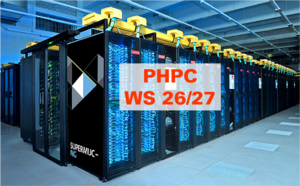
- Lecture: Thursday 9-12, M 110, Geschw.-Scholl Platz 1
- Lab: Thursday 12-14, M 110, Geschw.-Scholl Platz 1
- Enrollment key: ParallelPioneers
- First lecture: Thu. Oct. 15, 2026
- First lab: Thu. Oct. 22, 2026
- المعلم: Sergej-Alexander Breiter
- المعلم: Karl Fürlinger
Diese Vorlesung findet aller Voraussicht nach nicht statt!
- المعلم: Gidon Ernst
Enrolment Key: MLWS26/27
- المعلم: Aniri Aniri
- المعلم: Tong Liu
- المعلم: Zefeng Wang
- المعلم: Jingpei Wu
- المعلم: Stefan Metzger
- المعلم: Katharina Novikov
- المعلم: Helmut Reiser
This lecture will be held in english.
Artificial intelligence uses ideas and concepts from different disciplines, such as neuroscience, cognitive science, mathematics and engineering. In recent years, machine learning techniques, a subfield of artificial intelligence, have achieved impressive success in applications such as image categorization, face or speech recognition, language processing, and control problem solving. The goal of the course is to understand the fundamentals of intelligent systems, focusing on an interplay between application (practice) and mathematical background (theory).
A selection of the topics covered is:
- Basic and advanced techniques of intelligent systems
- Optimization
- Intelligent systems in practice
- Multi-agent systems
- Foundation models
Enrolment Key: IntSys_2026/27
- المعلم: Alexander Feist
- المعلم: Jonas Nüßlein
- المعلم: Simon Schlichting

During the last decade, the availability of large amounts of data and the substantial increase in computing power allowed a renaissance of neural networks and advanced planning techniques for independent agents. Whereas deep learning extended well-established neural network technology to allow a whole new level of data transformation, modern reinforcement learning techniques yield the artificial backbone for intelligent assistant systems and autonomous vehicles. The course starts with an introduction to neural networks and explains the developments that led to deep architectures. Furthermore, the course introduces advanced planning techniques and how they can be trained using deep neural networks and other machine learning technologies.
The enrollment key will be announced in the lectures.
| Lecture | Fri, 9:00 - 12:00 h | Schellingstr. 3 (S) / S 003 | 16.10.2026 |
| Tutorial 1 | Mon, 14:00 - 16:00 h | Geschw.-Scholl-Pl. 1 (A) / A 119 | 26.10.2026 |
| Tutorial 2 | Mon, 16:00 - 18:00 h | Geschw.-Scholl-Pl. 1 (A) / A 119 | 26.10.2026 |
- المعلم: Zongyue Li
- المعلم: Philipp Pfefferkorn
- المعلم: Matthias Schubert
Content
The vast increase in data volume in almost every field results in increased difficulty or even impossibility for information analysis. Especially in areas such as biological measurement evaluation (e.g., gene sequencing, micro-array processes …) or data transaction in large telecommunications or network operators, using data without computational aid is inconceivable. The research area “Knowledge Discovery in Databases (KDD)” investigates solutions to these problems. It combines statistics, machine learning, database systems, and (semi-) automatic extraction methods for valid, new, and potentially useful knowledge from large databases. The term data mining in this context refers to the fundamental step in the KDD process, in which the actual analysis of the data is carried out. Data mining is often applied to large amounts of operational data that are managed separately in so-called data warehouses. The frequently used term Business Intelligence describes, among other things, the application of data mining algorithms to the information provided by a data warehouse in order to support targeted decision-making processes. The lecture gives an overview of the basics of the most important KDD techniques. Particularly: Classification, regression/trend detection, clustering, outlier detection, association rules, and process mining.
To deepen the lecture, exercises are offered in which the presented procedures are further explained and illustrated with practical examples.
Enrollment
Enrollment begins on 12.10.2026
Moodle Enrollment key: DMA1_2627
Please also make sure to register on LSF!
- المعلم: Philipp Jahn
- المعلم: Umut Kanilmaz
- المعلم: Thomas Seidl
- المعلم: Shubhangi Shubhangi
The lecture is a first introduction to category theory, following the book Category Theory by Awodey. This is a mathematics textbook but it is very self-contained. Familiarity to algebraic structures will be helpful, but is not a requirement, in order to follow this course.
The self-enrollment key is CT2627
- المعلم: Jasmin Blanchette
- المعلم: Massin Guerdi
- المعلم: Luca Maio
- المعلم: Yiming Xu
Automated theorem proving is a subfield of mathematical logic that concerns itself with proving mathematical theorems fully automatically using computer programs. These programs are called automated theorem provers. They can be used as standalone programs to solve logic problems or in tandem with interactive theorem provers (also called proof assistants) to discharge proof obligations that arise.
In this course, we will review some of the main approaches to automated theorem proving. The course focuses on the _theory_ of theorem proving. Stylistically, the course has a mathematical flavor (with definitions, lemmas, proofs, etc.).
Self-enrollment key: ATP202627
- المعلم: Jasmin Blanchette
- المعلم: Tanguy Bozec
- المعلم: Martin Desharnais
- المعلم: Moritz Roos