- Trainer/in: Lisa Wolf
Kursbereich: Sommersemester 2024
In dieser Veranstaltung beschäftigen wir uns mit den Grundlagen der Didaktik, die für die Pädagogik bei Verhaltensstörungen und die Planung sowie Durchführung von Unterricht in diesem Kontext relevant sind.
Anknüpfungspunkte zur vertieften Beschäftigung mit Aspekten, die für die Unterrichtung von Kindern und Jugendlichen mit dem Förderschwerpunkt emotionale und soziale Entwicklung entscheidend sind, sind Theorien, Konzepte, Prinzipien und Methoden aus der allgmeinen Didaktik sowie solche, die spezifisch für den Kontext Verhaltensstörungen angepasst oder entwickelt wurden.
The course Analysis of high-dimensional biological data (formerly Statistische Methoden in Genomik und Proteomik / Statistical methods for biological high-throughput data) will cover important statistical methods and concepts for the analysis of high-dimensional biological high-throughput data. We will focus on bulk RNA-Seq, single-cell RNA-Seq, proteomic, metabolic, and especially microbiome data such as 16S rRNA and other amplicon data.
Short Description: You will learn how to tackle practical challenges in ML using R. Topics include an introduction to an ML toolbox in R, (advanced) tuning techniques, custom ML pipelines, classifier calibration, handling class imbalances, ML benchmark experiments with hypothesis testing, ML model ensembling/stacking, and ML interpretability. Sessions consist of brief methodological overviews followed by hands-on exercises, requiring laptops for full engagement.
Prerequisite: To participate in this lecture, you must have completed and passed the courses:
Kick-off: Wednesday, April, 17th from 09:00 - 12:00 (s.t.) at Theresienstr. 39 - B 139 (check Moodle for up-to-date information)
Enrolment key: appml24
Die Berufsqualifizierende Tätigkeit I dient dem Erwerb erster praktischer Erfahrungen in spezifischen Bereichen der psychotherapeutischen Versorgung, umfasst 240h und ist notwendige Voraussetzung für die PsychotherapeutInnenausbildung. Sie können Ihr Praktikum in Vollzeit oder Teilzeit (auch möglich: 1 Tag in der Woche etc.) absolvieren.
Dienstag, 08:00-11:00 Uhr c.t., Amalienstr. 52 (Historicum), Raum K401
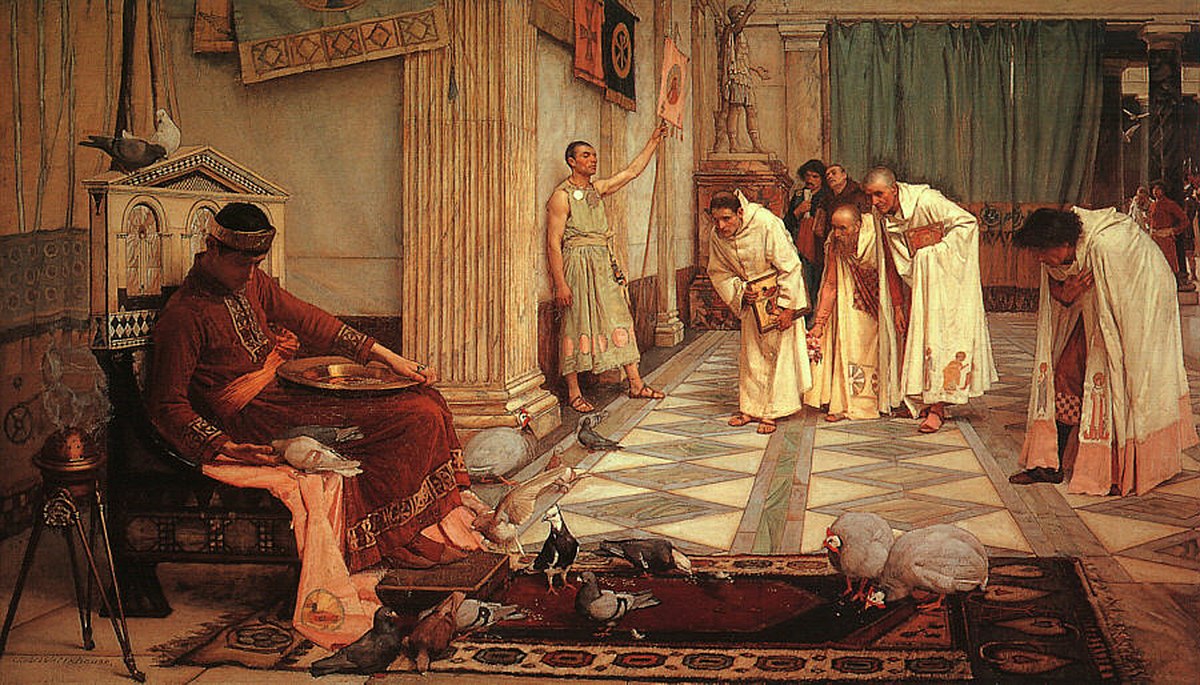
Die Spätantike galt lange Zeit als Epoche des Niedergangs der römischen Kultur. Bilder von bröckelnden Monumenten, barbarischen Horden und dekadenten Herrschern prägen noch immer die populäre Vorstellung der Zeit. Entgegen dieser Vorstellung war die Spätantike jedoch in vieler Hinsicht eine Blütezeit der römischen Welt, geprägt von erstaunlicher kultureller, wirtschaftlicher und politischer Stabilität, von neuen Ideen und dynamischen Persönlichkeiten.
Wie lebten Frauen und Männer, Kinder und Alte, Superreiche und Sklaven in dieser Zeit? Tatsächlich können wir für das Alltagsleben in dieser Epoche auf eine erstaunliche Fülle an Quellen zurückgreifen – von Gesetzestexten, Briefen und Predigten bis hin zu Inschriften und Papyrusfragmenten. Wir hören von Ehedramen und Liebeszaubern, von berühmten Wagenlenkern und heiligen Narren, von Immobilienspekulanten und christlichen Priestern im Bordell. Die großen politischen und religiösen Umwälzungen der Zeit bereiten dabei nur die Bühne, um im Basiskurs die Lebensrealität der verschiedenen Bewohner des Römischen Reiches näher zu beleuchten.
Contents: Decision theory deals with rational decisions under uncertainty. It has high interdisciplinary importance, for example, in the analysis and support of decisions in business administration or finance (e.g. investment strategies), economics or sociology (rational choice theory), medicine (e.g. expert systems) or engineering (e.g. autonomous control). Moreover, statistical decision theory can be seen as a formal framework for choosing analysis methods (optimal tests or estimators, best classification algorithms, etc.). This general view, understanding statistics and machine learning as special cases of decision theory, plays a fundamental role in the critical analysis and problem-adequate generalization of any data-based learning procedure.
The course first discusses the general structure of decision problems, including fundamental decision principles. Then it analyzes and characterizes the Bayes and minimax criteria as extreme poles to deal with (state) uncertainty and develops modern alternatives in the context of complex uncertainty (ambiguity).
Enrolment Key: DT24
Additional Note:
If you are interested in active participation in the course but cannot
always come in person for good reasons, you are welcome to contact me
(Thomas Augustin). We are currently investigating whether we can offer a
fallback Zoom solution.
The lecture aims at providing a basic theoretical and practical understanding of modern neural network approaches.
| Time | Place | Lecturers | |
|---|---|---|---|
| Lecture | Mo 4-6pm (c.t.) | Geschw.-Scholl-Pl. 1 (M) - M 014 | David Rügamer |
| Lab Session | Tue 14-16pm (c.t.) | Geschw.-Scholl-Pl. 1 (E) - E 216 | Emanuel Sommer |
Enrollment key: DLearn
Schedule:
| Person | Beginning | |||
|---|---|---|---|---|
| Lecture | Tuesday, 14:15-16:45 | Richard-Wagner-Str. 10 / D 105 | Hoffmann/Boulesteix | 16.04.24 |
| Exercise session | Monday, 10:15-11:45 | E 004 | Hornung | 29.04.24 |

Schedule
| Type | Date | Location | Start |
|---|---|---|---|
| Lecture | Wednesdays 08:15-10:45 | Geschw.-Scholl-Pl. 1 (A) / A 017 | 17.04.2024 |
| Lecture/Tutorial | Fridays 08:15-10:00 | 19.04.2024 |
Enrolment Key: ectheory24
Organisation
| Veranstaltung | Termin | Ort | Person |
|---|---|---|---|
| Vorlesung |
Mo, 12.00 - 14.00 |
Geschw.-Scholl-Pl. 1 - E 216 |
Küchenhoff |
| Vorlesung |
Do, 08.00 - 10.00 |
Schellingstr. 3 - S 004 |
Küchenhoff |
| Übung |
Di, 10.00 - 12.00 |
Geschw.-Scholl-Pl. 1 - F 007 |
Rave / Piller |
| Übung |
Do, 14.00 - 16.00 |
Geschw.-Scholl-Pl. 1 - F 007 |
Rave / Piller |
| Tutorium |
Di, 12.00 - 14.00 |
Geschw.-Scholl-Pl. 1 - F 007 |
Einschreibeschlüssel
LiMo_s24
| In der Vorlesung "Empirische Forschungsmethoden II-2" werden aufbauend auf den bereits absolvierten Lehrveranstaltungen (Vorlesung EFMI mit Übung) spezifische quantitative Methoden mit einer Relevanz für die Pädagogik und Bildungsforschung vorgestellt und vertieft. |
|---|
Ziel des Seminar ist es, Medienbildung kennenzuleren und gemeinsam digitale Materialien zu erstellen.

Die Veranstaltung wendet sich an Studierende im Bachelor Statistik (3. / 4. Semester). Das "Grundlegende Praxisprojekt" (BA Statistik und Data Science - PO 2021) ist eine Pflichtveranstaltung (Modul P 11.1).
Die Veranstaltung wird während der Vorlesungszeit angeboten. Diese Die Einführungsveranstaltung mit Anwesenheitspflicht findet am 23.04. 9-11 statt.
Aus organisatorischen Gründen ist eine frühzeitige, separate Anmeldung für die Teilnahme während der Vorlesungszeit nötig -- schreiben Sie sich bitte ein und gehen Sie dann zur Anmeldung auf der Kursseite.
Einschreibeschlüssel: grndlgnprks24
Femtosecond laser pulses can achieve enormous light intensity, so that electrons oscillate in the laser field with relativistic speed. This regime is extremely interesting from a physical point of view and leads to the acceleration of particles when interacting with plasmas. The emitted ultra-short, intense and mutually synchronous ion, electron and photon pulses enable novel applications and research, for example in medical physics. We will work out the theoretical and technical basics as well as prime application examples in the framework of the integrated laser-driven ion accelerator concept, which we are currently developing at the Petawatt laser system at the Centre for Advanced Laser Applications in Garching.
First session: H206, Wed, April 27th, 4.p.m c.t., H206 and via Zoom
Please register at LSF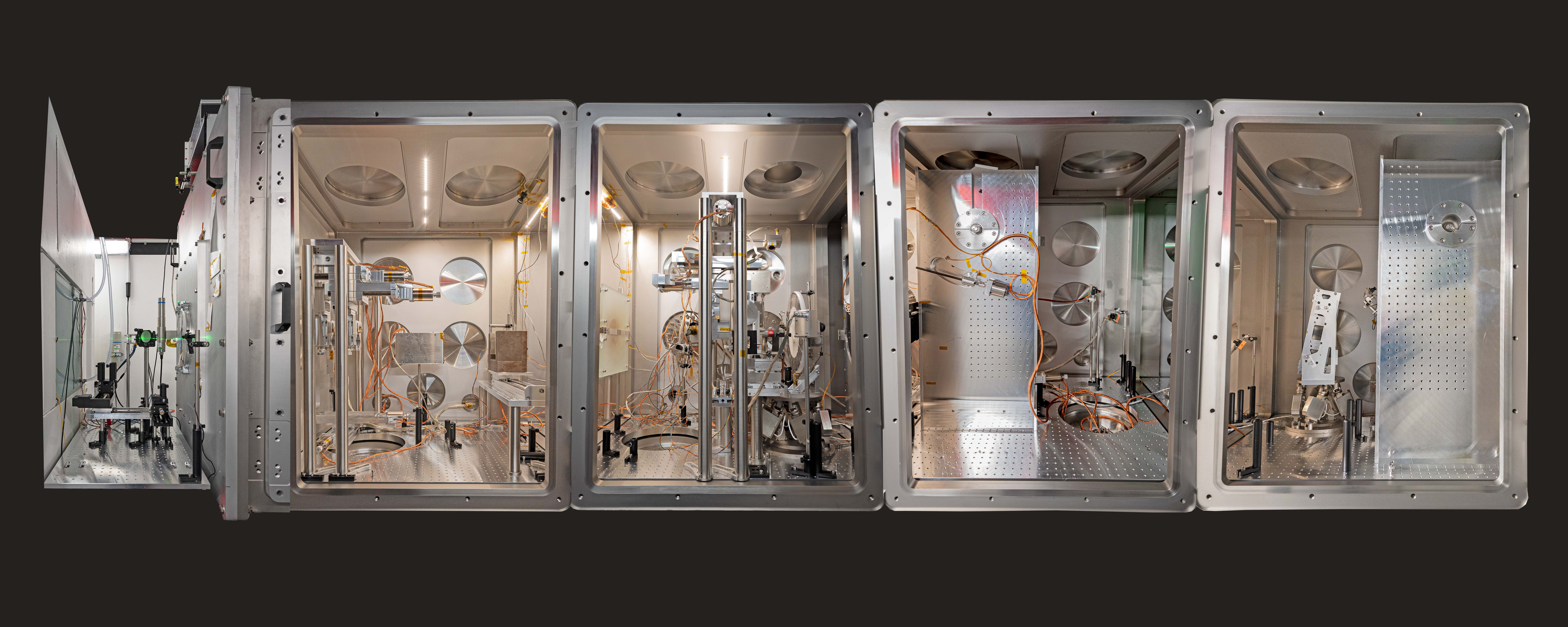

This lunch time seminar, entirely held in English
language, will introduce you to the exciting topic of medical imaging and
radiation treatment in cancer therapy. At the same time, you will learn, how to
critically read and discuss scientific literature and how to prepare and
present a scientific presentation on a topic from this area.
Bring your own lunch for the seminar.
The seminar consists of three blocks: It starts with few introductory lectures,
followed by a set of student seminar talks and closes with a block of student
paper presentations.
The seminar is intended for bachelor students from the 4th semester onwards,
interested in medical physics and/or the skills for reviewing, discussing and
presenting scientific content.
Please register on LSF (first come first served).
| Termin | Ort | Person | Beginn | |
|---|---|---|---|---|
| Vorlesung | Di, 08:30-10:00 Mi, 10:15-11:45 |
Geschw.-Scholl-Pl. 1 (D) / D 209 Schellingstr. 3 (S) / S 005 |
Thomas Nagler | 16.04.2024 |
| Übungsgruppe 1 | Mo, 16:15-17:45 | Geschw.-Scholl-Pl. 1 (M) - M 010 | Nicolai Palm | 22.04.2024 |
| Übungsgruppe 2 | Do, 12:15-13:45 | Geschw.-Scholl-Pl. 1 (D) - D 209 | Jana Gauß | 18.04.2024 |
| Tutorium | Fr, 12:15-13:45 | Schellingstr. 3 (S) / S 004 | Eugen Gorich | 19.04.2024 |
Dates: Wednesday 24.04.; 08.05.; 29.05.; 26.06.; 03.07.; 10.07.; 17.07.
Time: 09:00 - 12:00 s.t.
Location: A213 main building
Enrollment Key: MissingData24The second part of the course will provide a detailed introduction to multiple imputation, a convenient strategy for dealing with missing data. We will motivate the concept and illustrate why multiple imputation should generally be preferred over single imputation methods. The main focus of the course will be on strategies to generate (multiple) imputations and how to deal with common problems when applying the methods for large scale surveys. We will also discuss various options for assessing the quality of the imputations. All concepts will be demonstrated using software illustrations in R.
The course can be recognized as 'Selected Topics of Social Statistics and Social Data Science' (3 ECTS, WP 40). Alternatively, the course can be combined with the course "Measurement and Modelling, Part A" (offered each winter semester) to the 6 ECTS Module "Measurement and Modelling" (WP 38).
Termine:
| Termin | Ort | Person | Beginn | |
|---|---|---|---|---|
| Vorlesung | Di, 12:15-13:45 | Geschw.-Scholl-Pl. 1 (A) - A 021 | Schulz-Kümpel | 16.04.24 |
| Übung/Vorlesung | Do, 12:15-13:45 | Geschw.-Scholl-Pl. 1 (A) - A 022 | Schulz-Kümpel | 18.04.24 |
The course offers a unique, first-hand introduction to official
statistics. It is based on video material produced by colleagues from
Eurostat, the German Federal Statistical Office, and the statistics
departments of the European Central Bank and the Deutsche Bundesbank.
The material is successively made available for self-study and then
discussed in classroom meetings, during which some of the lecturers from
official statistics and students from Trier University will join us.
Enrolment key: EMOS-B24
Time: Tuesday from 4 pm (s.t.) to 5.30 pm, approximately every second week
Begin: Tuesday, April 19 in hybrid format (F007 (Main Building) and Zoom)
Liebe Studierende,
herzlich willkommen im Seminar Pädagogische Konzepte und therapeutische Maßnahmen der Prävention und Intervention (alte LPO: "Therapeutische Grundlagen").
Die Veranstaltung findet Mittwochs, von 8:00 - 10:00 Uhr in Raum B 257 in der Edmund-Rumpler-Straße 13 (mit dem 6. Semester und dem 8. Semester zusammen) statt.Ich freue mich auf den gemeinsamen Austausch mit euch!
Liebe Grüße
David Sachs
Bei Fragen: sachs.david@psy.lmu.de
Enrolment key: RegCorDat24
Date: Thursday 14:00-16:00
This is an inverted classroom style - course. We only meet once a week despite this being 4 hour / week because you are expected to come prepared to every session
-- that means: you've watched the lecture videos on LMUcast, you've
reviewed the slides, you've worked through the self-assessment quizzes,
and you've posted the questions you would like to see
addressed during the session in the Moodle forum.
Exercise sheets will be available at least one week
in advance, with full written solutions available before and discussed
during Thursday in-person sessions.
You are expected to hand in solutions for exercise sheets 2 and 4 via Moodle, due on May 09 and May 30, respectively.
Grading: Oral exam at the end of the semester.
This course will discuss essential research techniques in statistics and data science, also preparing students for successfully participating in seminars and writing a thesis. The material presented focuses mainly on classical research techniques and a first understanding of research as a social system. Beyond this, classroom discussions will hopefully help combine the classical techniques with "modern personal knowledge management methods", which are currently also intensively disseminated by different YouTube authors.
The course is part of the Bachelor’s programmes in Statistics and Data Science (150 major or 60 ECTS minors: `Methoden und Techniken des wissenschaftlichen Arbeitens’, P16.1, and WP 12.1 / WP 13.1, respectively ). All interested Master’s students and Bachelor's students from the "old PO" are most welcome as well. A certificate can be issued for active personal attendance.
NEW: Minor students and Bachelor's degree Erasmus students who will not attend a seminar can obtain 3 ECTS via an examation at the end of the course.
Time:
Monday 12.15 to 14.00, M 110 (main building), on April 22, May 6, May
13, May 20, June 5, and on a further date at the end of June (to be
arranged).
Enrolment key: ResTech24
If you are interested in active participation in the course but cannot always come in person for good reasons, you are welcome to contact me (Thomas AugustiIn). We are currently investigating whether we can offer a fallback Zoom solution.
Termin: Do 16.15-18.00 in D209
Die Ringvorlesung gibt einen Überblick über verschiedene Themengebiete der Statistik, die in den spezifischen Modulen nicht entsprechend behandelt werden können.
Geplant sind
* verschiedene Gastvorträge aus der Berufspraxis
* einige Vorträge zur Geschichte der Statistik und der Künstlichen Intelligenz inklusive ihrer Grundlagen
* Überblicksvorträge über Teilgebiete der aktuellen statistischen Forschung und damit über die verschiedenen Spezialisierungen im Masterstudium
* ein Themenblock zu Kommunikation statistischer Ergebnisse, Datenjournalismus und Open Science
Einschreibeschlüssel: Ringvorlesung
Die Veranstaltung bildet zusammen mit dem Grundlegenden Praxisprojekt das Pflichtmoduls P11: Einführung in die praktische Statistik (6 ECTS-Punkte). Es findet keine eigenständige Prüfung zu diesem Modulteil statt. Der Erwerb der entsprechenden Kompentenzen (3 ECTS-Pukte) kann zum Beispiel durch regelmäßige aktive Anwesenheit nachgewiesen werden. (Aternativen nach Rücksprache mit dem Veranstatltungsleiter.)| Date |
Time | Location |
|
|---|---|---|---|
| Initial meeting | 16.04.2024 |
9:00-12:00 | #144, Ludwigstr. 33 |
| Binding registration (Econ M.Sc.) |
19.04.2024 |
- | - |
| Final presentations |
11.07.2024 |
8:30-18:00 | #144, Ludwigstr. 33 |
| Term paper submission |
31.08.2024 | - |
A first meeting will take place at the beginning of the semester (will be scheduled in agreement with the participants), where the seminar topics are briefly introduced and assigned to the participants.
The main part of the seminar with the presentations and discussions will be held as a block during the semester
Seminar type: Block-type and in-person
Language: The seminar will be held in English
Target group: Bachelor and Master in Statistics
Recognition possibilities: Biostatistics, Methodology and Modeling
|
Dieses
Seminar soll in das neue Gebiet der medizinischen Physik einführen. Zusammen
mit Medizinphysiker*innen der Uni-Kliniken werden in den Seminarvorträgen die
Grundlagen der wichtigsten physikalischen Methoden in der Medizin erarbeitet. |
Schedule
| Time | Lecturer | Begin | |
|---|---|---|---|
Lecture | Tuesday, 12:15 - 13:45 | Prof. Dr. Heumann | 16.04.2024 |
Exercise course (Group 1) | Wednesday, 08:15- 09:45 | Sapargali, Garces Arias | 24.04.2024 |
Exercise course (Group 2) | Wednesday, 14:15 - 15:45 | Sapargali, Garces Arias | 24.04.2024 |
Lecture | Friday, 10:15 - 11:45 | Prof. Dr. Heumann | 19.04.2024 |
| Tutorium | Friday, 08:15 - 09:45 | Stephan | 26.04.2024 |
Dates:
| Date | Place | Person | Start | |
|---|---|---|---|---|
| Lecture | Wed, 12:15-13:45 | Geschw.-Scholl-Pl. 1 (M) / M 209 | Nagler | 17.04.24 |
| Lecture/Exercise | Thu, 10:15-11:45 | Prof.-Huber-Pl. (W) / Lehrturm-W401 | Nagler/Gauss | 18.04.24 |
|
The confrontation of theories with data is at the core of modern sciences. In astrophysics state of the art statistical methods are used to assess and improve models. In this course you will learn from first principles the basics of Bayesian statistics. The course aims that you gain an intuition of which methods to apply in different situations. An important concept is the role of priors. It is only in comparison to prior knowledge that data can inform you about a model. In particular we will study the following topics: |
People and Dates
| Date and Time | Place | Lecturer | |
Lecture | Mo. 10.00-12.00 | Geschw.-Scholl-Pl. 1 (M) -M 218 | David Rügamer |
| Tue. 10.00-12.00 | Geschw.-Scholl-Pl. 1 (E) - E 004 | ||
| Exercise | Thu. 12.00-14.00 | Geschw.-Scholl-Pl. 1 (B) - B 006 | Rickmer Schulte |
| Tutorial | Thu. 08.00-10.00 | Geschw.-Scholl-Pl. 1 (A) - A 021 | Elisa Noltenius |
Enrolment key: StatMod_s24
Schedule:
| Person | Beginning | |||
|---|---|---|---|---|
| Lecture/Exercise | Tuesday, 10:15-11:45 | B 006 | Hoffmann/Boulesteix | 16.04.24 |
Der Einschreibeschlüssel ist StoSta24
The lecture deals with theoretical and practical concepts from the fields of statistical learning and machine learning. The main focus is on predictive modeling / supervised learning. The exercise session applies these concepts and methods to real examples for illustration purposes.
Schedule:
| Person | Start | ||||
|---|---|---|---|---|---|
| Lecture | Wednesday, 12:15-13:45 |
| Bischl | 16.04.24 | |
| Exercise session | Thursday, 16:15-17:45 | Schellingstr. 3 (S) - S 003 | Pielok | 18.04.24 |