
- Trainer/in: Davide Cantoni
- Trainer/in: Tao Chen
- Trainer/in: Julian Detemple
- Trainer/in: Johannes Könemann
- Trainer/in: Yutaka Makabe
- Trainer/in: Jacqueline Adelowo
- Trainer/in: Jean-Victor Alipour
- Trainer/in: Ingrun Clement
- Trainer/in: Felix Knau
- Trainer/in: Yannick Knieriemen
- Trainer/in: Noah Lustermann
- Trainer/in: Chiano Patti
- Trainer/in: Hannah Von Bergmann
- Trainer/in: Buse Caba
- Trainer/in: Sofia Gómez Sánchez
- Trainer/in: Maddalena Totarelli
- Trainer/in: Katharina Wedel
- Trainer/in: Juliette Fournier
- Trainer/in: Juliette Fournier
- Trainer/in: Lara Andermann
- Trainer/in: Christina Meyer
- Trainer/in: Lasse von der Heydt Freiherr von Massenbach
- Trainer/in: Joachim Winter
- Trainer/in: Peter Zorn
In an increasingly interconnected world economy, this course applies the tools of public economics and game theory to interactions among sovereign states. It analyzes the strategic behavior of governments, studies cooperative and non-cooperative policy interactions, characterizes equilibrium outcomes, and evaluates them from a welfare perspective. Topics include, among others, international public goods, optimal tariffs, strategic trade policy, and tax competition.
- Trainer/in: Sven Simon
- Trainer/in: Uwe Sunde
- Trainer/in: Niklas Potrafke
- Trainer/in: Lukas Puschnig
- Trainer/in: Raphael Brade
- Trainer/in: Ludger Wößmann
- Trainer/in: Hannah Fuß

Microeconomics analyzes the economic behavior of households and firms and explains how markets in which households and firms interact work. The lecture introduces the fundamentals of the field, provides an overview of further topics that are explored in greater depth in other lectures, and is intended to spark your interest in economics.
- Trainer/in: Carlos Romero Blázquez
- Trainer/in: Henning Schatz
- Trainer/in: Klaus Schmidt
- Trainer/in: Monika Schnitzer
- Trainer/in: Valeria Burdea
- Trainer/in: Klaus Schmidt
- Trainer/in: Julian Detemple
- Trainer/in: Evelina Griniute
- Trainer/in: Yutaka Makabe
- Trainer/in: Daniela Olea Suarez
- Trainer/in: Davide Cantoni
- Trainer/in: Tao Chen
- Trainer/in: Marie-Caroline Ellmauer
- Trainer/in: Moritz Leitner
- Trainer/in: Lara Andermann
- Trainer/in: Philipp Brewing
- Trainer/in: Mathias Bühler
- Trainer/in: Tao Chen
- Trainer/in: Marie-Caroline Ellmauer
Examenskurs VWL I: Geldpolitik, Mikro- & Makroökonomik
Der Examenskurs VWL I wird im WS 2026/27 ausnahmsweise bereits vor dem offiziellen Vorlesungsbeginn des Wintersemesters stattfinden.
Folgende Termine sind geplant:
|
Freitag, |
11. September |
13:00-18:00 Uhr |
Leopoldstr. 13, H3, 3232 |
|
Samstag, |
12. September |
09:00-16:15 Uhr |
Leopoldstr. 13, H3, 3232 |
|
Montag, |
14. September |
11:00-12:30 Uhr |
online via Zoom |
|
Montag, |
21. September |
11:00-12:30 Uhr |
online via Zoom |
|
Montag, |
28. September |
11:00-13:15 Uhr |
online via Zoom |
|
Montag, |
05. Oktober |
11:00-13:15 Uhr |
online via Zoom |
|
Freitag, |
09. Oktober |
09:00-12:15 Uhr |
online via Zoom |
Die angegebenen Zeiten verstehen sich als s.t.-Angaben.
Eine Anmeldung zum Kurs ist nicht erforderlich. Bitte beachten Sie, dass die Präsenzveranstaltungen ausschließlich vor Ort stattfinden und nicht gestreamt werden.
Alle Materialien zum Kurs finden Sie im Moodle-Kurs. Einschreibeschlüssel: VWL1!
- Trainer/in: Jasmin Diemer
- Trainer/in: Aaron Günther
- Trainer/in: Luisa Lorenz
- Trainer/in: Stefan Smutny
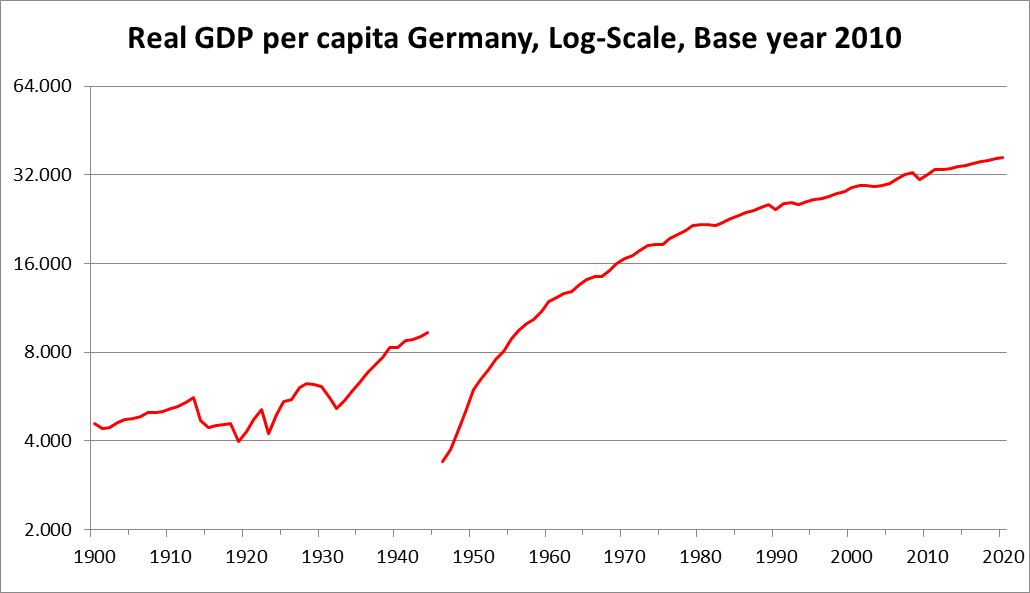
- Trainer/in: Margarita Gatsou
- Trainer/in: Uwe Sunde
- Trainer/in: Philipp Brewing
- Trainer/in: Claudia Pilizota
- Trainer/in: Claudia Steinwender
- Trainer/in: Christina Meyer
- Trainer/in: Joachim Winter
- Trainer/in: Andreas Roider