
- Trainer/in: Nicholas Karpowicz
- Trainer/in: Benedict Röcken
In this lecture, we will cover a variety of topics related to the interaction of different quantum degrees of freedom. The lecture builds on the description of the quantized electromagnetic field covered in Quantum Optics 1, but goes significantly beyond the topics covered there. In particular, you will learn about the description and effects occurring when light couples to two- and three-level atoms, and how light propagation is altered through ensembles of particles. Subsequently, we will revisit quantization of the electromagnetic field, and discuss experimentally relevant systems such as cavity QED and quantum optomechanics. We will also venture into the description of open quantum systems and connect this to concepts in quantum information theory. In the end, we will discuss special topics, including quantum-enhanced metrology and quantum networking.
The building blocks discussed in this lecture span a wide range of topics relevant for modern experimental quantum physics, and form the basis of a number of important technological applications including atomic clocks, quantum sensors or quantum computers.
- Trainer/in: Jacopo De Santis
- Trainer/in: Johannes Zeiher
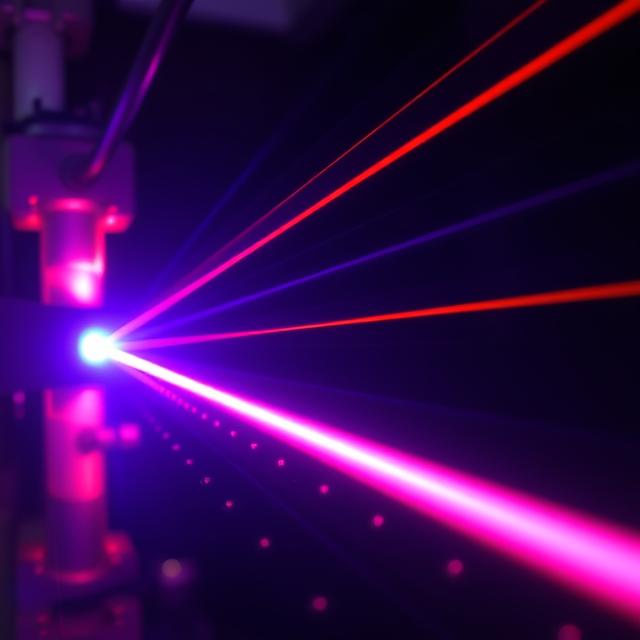
This lecture provides a coherent introduction to the physics of electrons in strong laser fields—from their relativistic motion and the ponderomotive force to the basic concepts of plasmas and electromagnetic waves in plasma media. Building on this foundation, we develop modern ideas of nonlinear relativistic plasma optics, including relativistic self‑focusing, and self‑phase modulation, and show how intense laser pulses reshape their own propagation in underdense plasma. We then explore laser‑driven acceleration mechanisms, from laser wakefield acceleration in gas targets to ion acceleration at solid surfaces, and discuss how phenomena such as wavebreaking, controlled injection, and radiation‑pressure acceleration enable compact sources of high‑energy electron and ion beams. Finally, we connect these concepts to applications such as bright X‑ray generation from betatron and undulator radiation and discuss how laser‑plasma accelerators may drive future compact free‑electron‑laser–like light sources, emphasizing both the underlying physics and the experimental parameter regimes relevant for state‑of‑the‑art research.
- Trainer/in: Léa Espeyrac
- Trainer/in: Stefan Karsch
- Trainer/in: Felipe Pena Asmus
- Trainer/in: Vladislav Yakovlev
- Trainer/in: Ildiko Kecskesi
- Trainer/in: Philipp Preiss
- Trainer/in: Jin Zhang
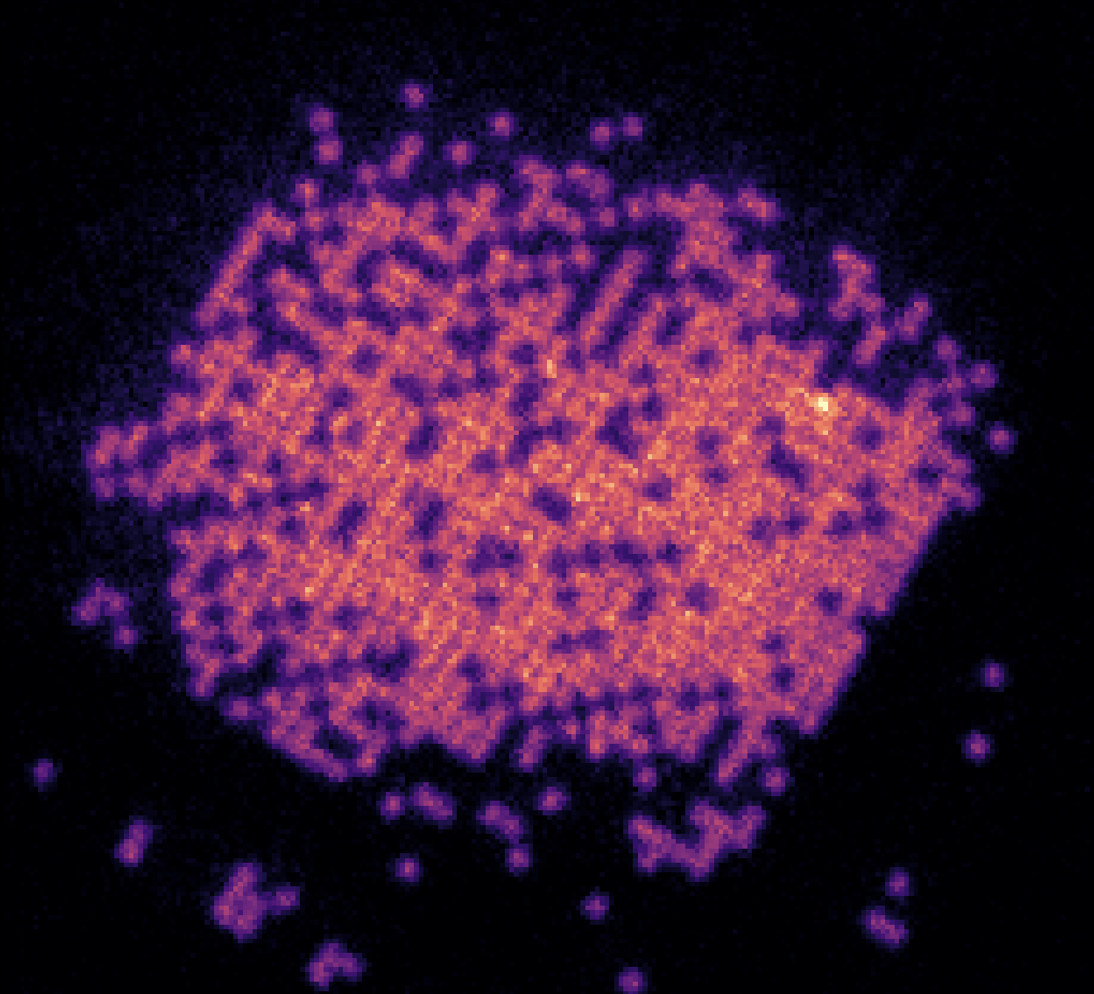
This course covers applications of cold neutral atoms for quantum technologies, with the main focus on quantum simulation and quantum computation. Atoms provide many opportunities for the realization of high-fidelity qubits across different energy scales, ranging from the microwave to the optical domain. Laser cooling techniques allow us to efficiently cool the atoms to extremely low temperatures so that atoms can be trapped in optical potentials generated with laser beams. The high degree of control that has been achieved, for instance, led to the development of the world’s best clocks. In this course, we will introduce fundamental concepts and experimental techniques needed to prepare, manipulate, and detect cold neutral atoms in optical arrays. We will discuss how interactions between atoms can be engineered to realize quantum gates to build a universal quantum computer. Moreover, the interaction between and the dynamics of many particles in optical arrays naturally enable analog quantum simulations of complex many-body systems, ranging from condensed matter to statistical physics and high-energy physics.
The lectures are combined with a weekly journal club, where we discuss original publications related to the course. Additional problem sets supplement the course.
- Trainer/in: Andrea Alberti
- Trainer/in: Immanuel Bloch