- Trainer/in: Ka Hei Choi
- Trainer/in: Jonas Egle
- Trainer/in: Navid Emami
- Trainer/in: Afonso Falcão Ponce De Leão Paulouro
- Trainer/in: Maximilian Freiheit
- Trainer/in: Stefan Hofmann
- Trainer/in: Jeng-Yu Hung
- Trainer/in: Danial Jalaeiansamani
- Trainer/in: Seyf Kaddachi
- Trainer/in: Philipp Kaufmann
- Trainer/in: Björn Ladewig
- Trainer/in: Felix Schwarzfischer
- Trainer/in: Timo Zacharias
- Trainer/in: Malte Zehnpfennig
Suchergebnisse: 11317

- Trainer/in: Christin Brando
- Trainer/in: Manlio Groß
- Trainer/in: Anna König
- Trainer/in: Alexander Lückenhaus
Syllabus:
- Overview
- Fundamentals and Properties of Stochastic Processes
- Univariate ARIMA-Processes
- Estimation and Forecasting of ARIMA-Models
- Univariate GARCH-Models + Extensions
- Selected aspects: Long Memory und Fractional Differencing, Threshold-Models
Intended audience: Advanced bachelor and master students of statistics, mathematics, computer science (Informatik), economics and business administration.
Prerequisites: Solid mathematical foundations (analysis and linear algebra), basic knowledge in econometrics (econometrics 1) or statistics (linear models).
Record of Achievement:
- Trainer/in: Dennis Mao
- Trainer/in: Elke Inckemann
- Trainer/in: Marlene Voit
- Trainer/in: Alexandra Nitz
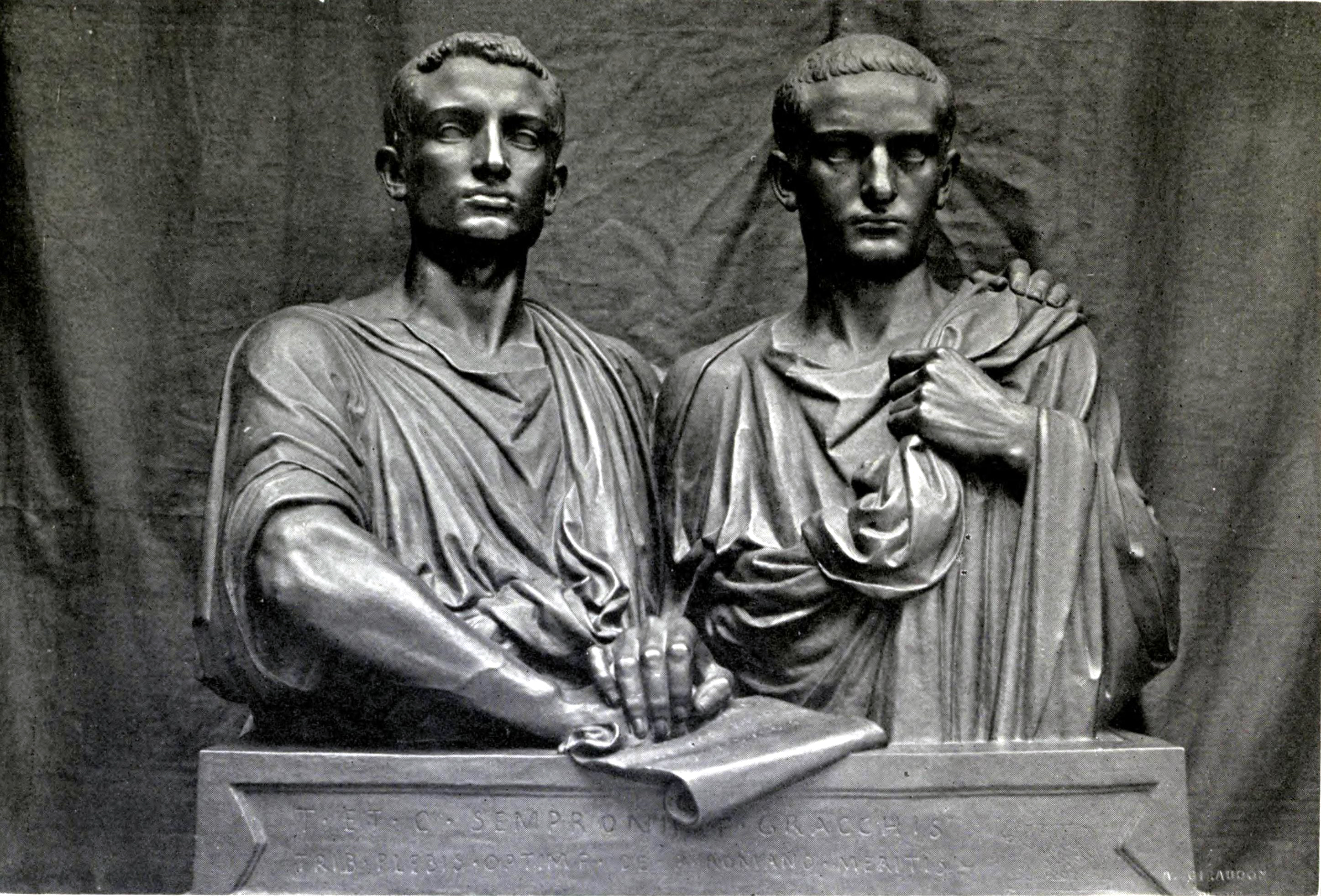
Das Jahr 133 v. Chr. war ein Epochenjahr. In diesem Jahr brachte der
Volkstribun Tiberius Sempronius Gracchus, Spross einer alten
aristokratischen Familie, ein Agrargesetz zugunsten der einfachen
römischen Bürger ein. Öffentliches Ackerland sollte an arme Bürger
verteilt werden, um ihre materielle Not zu lindern und das Fundament des
Imperium Romanum zu erhalten: denn diese Bürger hatten als
Milizsoldaten Roms Aufstieg erkämpft. Das Problem: Das öffentliche Land,
um das es ging, war teils seit Generationen in der Hand senatorischer
Grundbesitzer, die es wie ihren Privatbesitz behandelten. Der Konflikt
eskalierte schnell: Tiberius brach die ungeschriebenen Regeln, die die
Macht einzelner Magistrate beschränkten und das Fundament römischer
Politik bildeten. Seine Gegner wiederum brachen ein religiöses Tabu und
erschlugen den Volkstribun und seine Anhänger im Tumult. Zehn Jahre
später unternahm Gaius einen neuen Anlauf, um als Volkstribun die
sozialen Grundprobleme Roms anzugehen:Einn ganzes Reformbündel sollte
Macht und Wohlstand so umverteilen, dass der Stadtstaat, der ein
Weltreich regierte, wieder auf festen Füßen stand. Gaius' Reformpläne
wurden sabotiert und verschleppt, er selbst am Ende ermordet, seine
Anhänger ins Exil vertrieben. Aber die sozialen Probleme blieben und
sollten den Nährboden für viele weitere politische Krisen bilden.

- Trainer/in: Moritz Hinsch
- Trainer/in: Ulrike Schaupp
- Trainer/in: Annika Lang
- Trainer/in: Kirsten Ludwig
- Trainer/in: Meike Engelhardt
- Trainer/in: Heide Froschauer
- Trainer/in: Ruth Sarimski
- Trainer/in: Petra Barchfeld-Pekrun
- Trainer/in: Julia Kantreiter
- Trainer/in: Thomas Ehring
- Trainer/in: Franziska Motka
- Trainer/in: Antonia Nauerz
- Trainer/in: Verena Semmlinger
- Trainer/in: Charlotte Wittekind
- Trainer/in: Thomas Ehring
- Trainer/in: Frederic Göhringer
- Trainer/in: Thomas Schenk
- Trainer/in: Franz-Peter Schwarzacher
- Trainer/in: Luca Wollenberg
- Trainer/in: Thomas Ehring
- Trainer/in: Felix Brandl
- Trainer/in: Thomas Schenk
- Trainer/in: Paul Fabian
- Trainer/in: Ingrid Karlitschek
- Trainer/in: Peter Zentel
- Trainer/in: Ingrid Karlitschek
- Trainer/in: Peter Zentel
In dieser Veranstaltung beschäftigen wir uns mit den Grundlagen der Didaktik, die für die Pädagogik bei Verhaltensstörungen und die Planung sowie Durchführung von Unterricht in diesem Kontext relevant sind.
Anknüpfungspunkte zur vertieften Beschäftigung mit Aspekten, die für die Unterrichtung von Kindern und Jugendlichen mit dem Förderschwerpunkt emotionale und soziale Entwicklung entscheidend sind, sind Theorien, Konzepte, Prinzipien und Methoden aus der allgmeinen Didaktik sowie solche, die spezifisch für den Kontext Verhaltensstörungen angepasst oder entwickelt wurden.

- Trainer/in: Daniela Michnay-Stolz
- Trainer/in: Anett Platte
- Trainer/in: Eva Kunerl
- Trainer/in: Annika Lang
Dieses Seminar richtet sich an Studierende, die zur Prüfung im Staatsexamen Pädagogik bei Verhaltensstörungen für den Prüfungsturnus Herbst 2025 angemeldet sind.
Studierende, die erst im Frühjahr 2026 ins Examen gehen werden, können das Seminar im Wintersemester 2025/26 belegen, da die Veranstatung jedes Semester angeboten wird.
Im Zentrum der Veranstaltung stehen aktuelle Entwicklungen und Herausforderungen im Hinblick auf pädagogische, didaktische und psychologisch-förderdiagnostische Fragestellungen im Kontext von Verhaltensstörungen. Diese Fragen werden im Sinne eines prüfungsvorbereitenden Seminars für das Staatsexamen (Klausur) bearbeitet und intensiv diskutiert.
In diesem Seminar findet ausdrücklich KEINE inhaltliche Wiederholung von Prüfungswissen im Fach Pädagogik bei Verhaltensstörungen statt.
Ziel ist es, neben der Klärung allgemeiner und spezifischer Fragen zur schriftlichen Prüfung, mit Ihnen anhand ausgewählter Fragestellungen mögliche Problemstellungen herauszuarbeiten, entsprechende Gliederungen zu erstellen und denkbare Argumentationslinien zu entwerfen bzw. auf Plausibilität zu prüfen.

- Trainer/in: Daniela Michnay-Stolz
Format
Lecture
- Time: Monday 08:30 - 10:00 am.
- Location: F 007.
Exercise
- Time: Friday 10:15 - 11:45 am.
- Location: F 007.
Enrollment key
- Please only enroll if you want to ACTIVELY participate, you will be automatically unenrolled after 1 month of inactivity. The enrollment key is: IML-2025_advml
Contents
This course is an introduction into concepts and methods of machine learning interpretability and their implementation with R or python. It counts as the module "Advanced Machine Learning". The course focuses on model-agnostic methods for tabular data and in parts is close to the course on our website. Course topics include a general introduction into questions and concepts of interpretable ML, inherently interpretable ML models, global and local feature effect methods, functional decompositions, Shapley values, feature importance methods, regional feature effect methods and local as well as counterfactual explanations.- Trainer/in: Coco Bögel
- Trainer/in: Giuseppe Casalicchio
- Trainer/in: Emily Abdelfattah
- Trainer/in: Alexandra Ametsberger
- Trainer/in: Maria Brighina
- Trainer/in: Larissa Heindl
- Trainer/in: Lena Nocke
- Trainer/in: David Rombach
- Trainer/in: Eva Schüßler
- Trainer/in: Anita Schwarzenböck
- Trainer/in: Hannah Seitzinger
- Trainer/in: Antonia Stede
- Trainer/in: Oliver Tönnies
- Trainer/in: Gina Wiche
- Trainer/in: Peter Zentel
- Trainer/in: Kerstin Zoller
The course is an introduction to widely used algorithms and data structures, focusing on those most useful in data science. Students are introduced to how data is represented in memory, from individual characters and numbers to complex structures representing hierarchies and graphs. The standard analytical tools used to determine an algorithm's efficiency and the accuracy of its results are also covered.
This course can be taken as an elective module "WP1" and is recommended for the 6th semester (4th semester if you are motivated) in the Bachelor's program. Note that this course can not be credited towards the Master's degree. It targets students with an interest in programming, computer science, and algorithmic thinking. If you liked ProgR, we think you will also like this course.
Schedule:
| Day / Time | Room | Lecturer | Dates | ||
|---|---|---|---|---|---|
| Lecture | Tuesday 14:00--16:00 c.t. |
| Bischl | 2025-04-29 -- 2025-07-22 | |
| Lct. / Ex. | Wednesday 12:00--14:00 c.t. | Schellingstr. 3 (S) - S 005 | Binder | 2025-04-23 -- 2025-07-23 |
Credits: 6 ECTS
- The enrolment key is: AL_GODS_25

- Trainer/in: Martin Binder
- Trainer/in: Bernd Bischl
- Trainer/in: Tobias Pielok
- Trainer/in: Claudia Umlauf
- Trainer/in: Ulrike Meier de West
- Trainer/in: Eva Schechner
- Trainer/in: Ulrike Meier de West
- Trainer/in: Eva Schechner
The course Analysis of high-dimensional biological data (formerly Statistische Methoden in Genomik und Proteomik / Statistical methods for biological high-throughput data) will cover important statistical methods and concepts for the analysis of high-dimensional biological high-throughput data. We will focus on bulk RNA-Seq, single-cell RNA-Seq, proteomic, metabolic, and especially microbiome data such as 16S rRNA and other amplicon data.
Schedule:
| Date and Time | Place | Person | Beginn | |
|---|---|---|---|---|
| Lecture | Wed, 14:00 - 16:00 | Prof.-Huber-Pl. 2 (V) - LEHRTURM-VU107 |
C.L Müller | 23.04.2025 |
| Exercises | Mo, 10:00 - 12:00 (bi-weekly) |
Geschw.-Scholl-Pl. 1 (M) - M 203 | Olayo-Alarcon | 05.05.2025 |
Enrollment key:
HighDimBio25
- Trainer/in: Christian Müller
- Trainer/in: Roberto Olayo Alarcon
Short Description: You will learn how to tackle practical challenges in ML using R. Topics include an introduction to an ML toolbox in R, (advanced) tuning techniques, custom ML pipelines, classifier calibration, handling class imbalances, ML benchmark experiments with hypothesis testing, ML model ensembling/stacking, and ML interpretability. Sessions consist of brief methodological overviews followed by hands-on exercises, requiring laptops for full engagement.
Prerequisite: To participate in this lecture, you must have completed and passed the courses:
- Introduction to Machine Learning (I2ML)
- Programming with Statistical Software (R), ideally with a good grade as good knowledge of R is required
Kick-off: Wednesday, April, 23rd from 09:00 - 12:00 (s.t.) (check Moodle for up-to-date information)
Enrolment key: appml25
- Trainer/in: Giuseppe Casalicchio
- Trainer/in: Fiona Ewald
- Trainer/in: Matthias Feurer
This advanced course explores the fascinating world of attosecond physics, where we study and control electron dynamics on their natural timescale. The course covers fundamental concepts of ultrafast laser physics, high-harmonic generation, attosecond pulse generation and measurement, and applications in atomic, molecular, and solid-state physics.
This course is also an educational experiment that combines traditional physics instruction with cutting-edge AI tools to create a more personalized and engaging learning experience. Students will learn not only the physics but also develop crucial skills for the AI era: how to effectively combine human reasoning with AI assistance, how to critically evaluate AI-generated content, and how to leverage AI tools for scientific exploration while maintaining rigorous physical understanding.
The course features brief introductory lectures followed by AI-enhanced independent learning and interactive problem-solving sessions. Students will work both individually and in small groups, applying their knowledge to problems in attosecond physics. This format allows for personalized learning paths while ensuring thorough understanding of the underlying physics through peer discussion and instructor guidance.
This course is particularly suitable for students interested in pursuing research in ultrafast and attosecond physics, quantum dynamics, or related fields. Prior knowledge of quantum mechanics and electrodynamics is required.
Please note: This is an experimental course format. Students should be prepared to actively engage in shaping their learning experience and provide feedback to help optimize this teaching approach.

- Trainer/in: Vladislav Yakovlev
- Trainer/in: Ulrike Schaupp
- Trainer/in: Iman El Abdellaoui
Teilnehmende dieses BA-Seminars werden basierend auf der offiziellen Seminareinteilung von Dr. Schollmeyer dem Moodle-Kurs hinzugefügt.
Wichtige Informationen zur Orientierung sind in diesem Dokument zusammengefasst.
Bei Fragen wenden Sie sich bitte an ludwig.bothmann@lmu.de
Kick-off: 10.04.25, 12.15-13.45 Uhr, Alte Bibliothek, Ludwigstr. 33, Raum 245
- Trainer/in: Ludwig Bothmann
- Trainer/in: Sabrina Benz
- Trainer/in: Johannes Kopf-Beck
- Trainer/in: Angelika Bauer
Armut gilt seit dem Beginn schriftlicher Überlieferung als eines der größten Menschheitsübel und ist dennoch fünftausend Jahre später noch nicht ausgerottet. Noch immer zwingt materieller Mangel Millionen von Menschen dazu, ihre Freiheit und ihre Gesundheit aufs Spiel zu setzen oder aufzuopfern. Dementsprechend hart werden die aus Armut resultierenden Konflikte geführt: um die Verteilung knapper Ressourcen, aber auch um die Verantwortung für die Not und Hilfe für die Notleidenden. Es geht dabei nicht nur um Fragen von Macht und Moral, sondern auch um Definitionen und Weltanschauungen: Woran bemisst sich, ob jemand arm ist? Wann sind seine Mitmenschen zur Hilfe verpflichtet? Und macht Reichtum wirklich glücklich?
Bereits in der griechisch-römischen Antike wurden diese Fragen diskutiert, weil Armut und die daraus folgenden Konflikte alltägliche Realität waren. So vertraut das Problem scheint, so abweichend waren die Antworten, die in der politischen Praxis und gelehrten Theorie gefunden wurden. Die Auseinandersetzung mit den Realitäten und Diskursen von Armut befördert deshalb gleichermaßen ein allgemeines Verständnis der Grundprobleme sozialer Macht und Gerechtigkeit wie auch der historischen Besonderheiten der antiken Gesellschaft.
Im Kurs werden wir in einem diachronen Längsschnitt von den Stadtstaaten des archaischen Griechenlands bis zum römischen Weltreich der Spätantike gehen und danach fragen, wie materieller Mangel mit Landwirtschaft, Geldschulden, politischer Mitbestimmung, imperialer Herrschaft und religiösen Überzeugungen zusammenhängt. Der Kurs verknüpft dabei eine Einführung in die antike Gesellschaftsgeschichte mit einer Einführung in die Methode der kritischen Lektüre einschlägiger Quellentexte. Lyrik, Bühnendramen, Gerichtsreden, Geschichtswerke und theologische Traktate: Wie können literarische Gattungen, die von und für eine kleine Oberschicht geschrieben wurden, trotzdem Auskunft über die Lebensrealität der breiten Bevölkerung geben, die ihr täglich Brot hart erarbeiten mussten und kaum Selbstzeugnisse hinterließ?

- Trainer/in: Moritz Hinsch
- Trainer/in: Wolfgang Wurstbauer
Instructors:
- David Rügamer
- Mina Rezaei
- Emanuel Sommer
Time:
- Lecture: Every Monday 16:00 - 18:00 (c.t.) -> Room: Geschw.-Scholl-Pl. 1 (M) / M 105
- Labs: Every Thursday 10:00 - 12:00 (c.t.) -> Room: Geschw.-Scholl-Pl. 1 (M) - M 014
Start:
- Note: Due to labor day (public holiday),
- the first lab session will be on May 8
- the first lecture session will be on May 5
Enrollment Key:
- Singularity
- Trainer/in: Mina Rezaei
- Trainer/in: David Rügamer
- Trainer/in: Emanuel Sommer
- Trainer/in: Ulrike Schaupp
- Trainer/in: Attila Zarka
- Trainer/in: Florian Böschl
Schedule
| Type | Date | Location | Start |
|---|---|---|---|
| Lecture | Mondays 12:15-14:00 | Geschw.-Scholl-Pl. 1 (A) / A 022 | 23.04.2025 |
| Lecture/Tutorial | Fridays 12:15-14:00 | 25.07.2025 |
Enrolment Key: ectheory25
- Trainer/in: Mauricio Olivares Gonzalez
- Bachelor Statistik und Data Science: WP7 Ausgewählte Gebiete der statistischen Modellierung
- Nebenfach Statistik und Data Science (60 ECTS): WP6 Einführung in die Bayes-Statistik
- Nebenfach Statistik und Data Science (30 ECTS): WP8 Einführung in die Bayes-Statistik
- Bachelor Informatik mit integriertem Anwendungsfach Statistik: WP40 Einführung in die Bayes-Statistik
- Bachelor Wirtschaftsmathematik: P17 Ausgewählte Gebiete der angewandten Statistik
- Andere Studiengänge auf Anfrage
- Trainer/in: Martje Rave
- Trainer/in: Volker Schmid
Organisation
| Veranstaltung | Termin | Ort | Person |
|---|---|---|---|
| Vorlesung |
Mo, 12.00 - 14.00 |
Schellingstr. 3 (S) Raum S 001 |
Hoffmann |
| Vorlesung |
Di, 12.00 - 14.00 |
Geschw.-Scholl-Pl. 1 (A) - A 120 |
Hoffmann |
| Übung |
Di, 10.00 - 12.00 |
Geschw.-Scholl-Pl. 1 (A) - A 120 | Gruber/Sauer |
| Übung |
Do, 14.00 - 16.00 |
Geschw.-Scholl-Pl. 1 (A) - A 120 |
Gruber/Sauer |
| Tutorium |
Mo, 12.00 - 14.00 |
Schellingstr. 3 (S) Raum S 001 | Gorich |
Einschreibeschlüssel
LiMo_s25
- Trainer/in: Eugen Gorich
- Trainer/in: Cornelia Gruber
- Trainer/in: Sabine Hoffmann
- Trainer/in: Christina Sauer
- Trainer/in: Mathias Twardawski
- Trainer/in: Concettina Iovine
- Trainer/in: Ulrike Meier de West
- Trainer/in: Eva Schechner
- Trainer/in: Andrea Dawid
- Trainer/in: Ulrike Meier de West
- Trainer/in: Eva Schechner
- Trainer/in: Attila Zarka
- Trainer/in: Eva Schechner
- Trainer/in: Johannes Kopf-Beck
Moodle Kurs zur Vorlesung Diagnostik und Testtheorie im Förderschwerpunkt Lernen
- Trainer/in: Markus Gebhardt
- Trainer/in: Susanne Giering
- Trainer/in: Judith Zellner
- Trainer/in: Susanne Giering
Lesen gilt als Kernkompetenz für die Teilhabe an Bildung und Gesellschaft. Der Grundschule kommt im Aufbau solider Lesekompetenz eine Schlüsselstellung zu. Dass diese Aufgabe in der Unterrichtsrealität nach wie vor nicht für alle Kinder zufriedenstellend gelöst wird, zeigen erneut die Ergebnisse aktueller nationaler wie internationaler Leistungsvergleichsstudien (Stanat et al. 2022, McElvany et al., 2023). Im Seminar beschäftigen wir uns mit der Frage, wie Lesekompetenz systematisch aufgebaut, passgenau gefördert und Leseverhalten positiv beeinflusst werden kann. Dabei muss es im Sinne eines ganzheitlichen Lesekompetenzbegriffs (Rosebrock & Nix, 2020) neben der Lern- auch immer um die Persönlichkeitsentwicklung der Kinder gehen. Auf Basis der Erarbeitung der theoretischen Grundlagen wird daher besonders das Potential kooperativer Lernphasen und der multimodalen Auseinandersetzung mit aktueller Kinderliteratur für einen zeitgemäßen Leseunterricht beleuchtet.
- Trainer/in: Anette Kronschnabl
- Trainer/in: Katrin Miller
- Trainer/in: Daniela Neidiger-Selmayr
- Trainer/in: Petra Barchfeld-Pekrun
- Trainer/in: Mario Gollwitzer
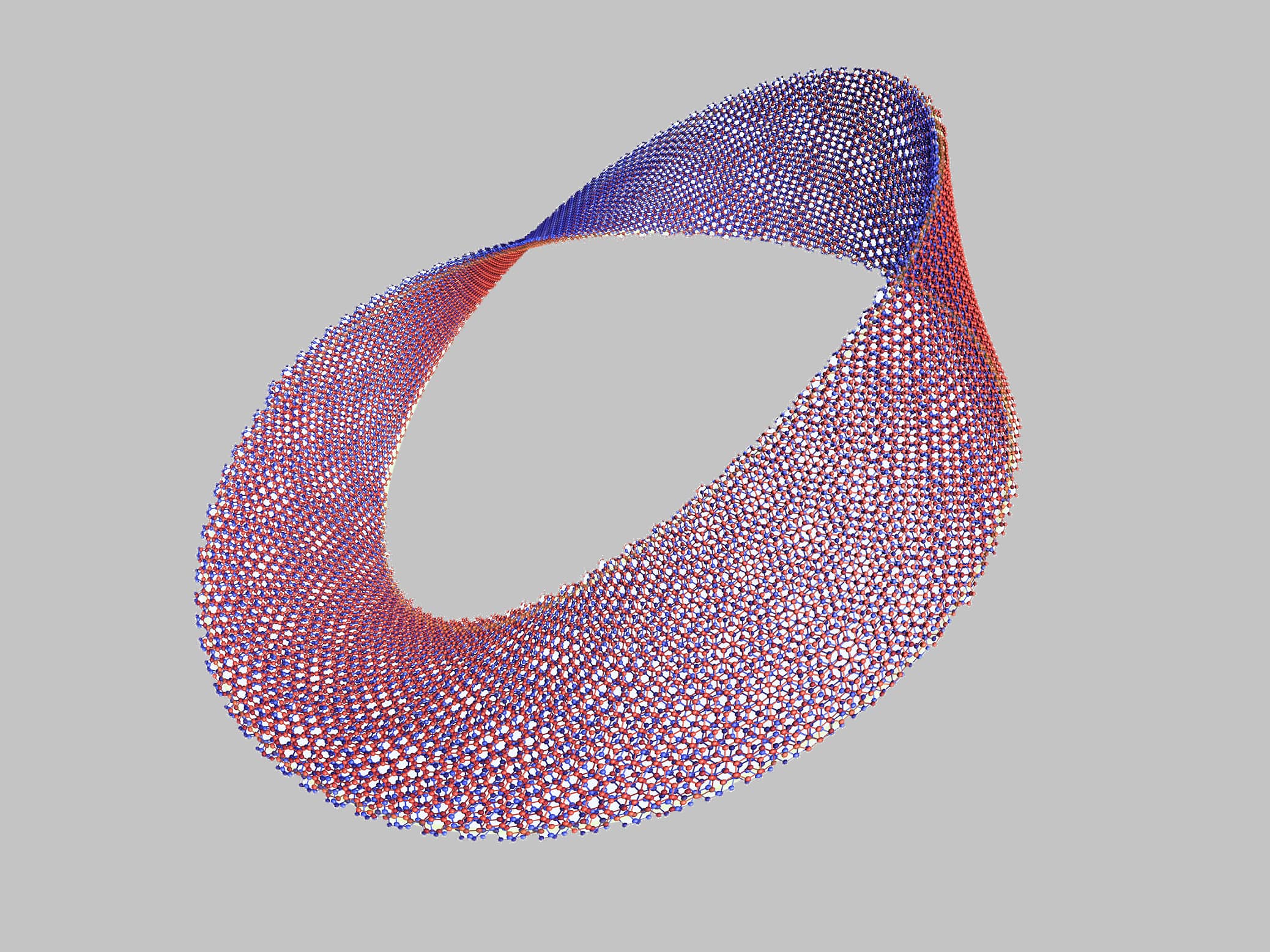
This class builds upon the “E_M1 Advanced Solid
State Physics” lecture and develops an introductory-level insight into the main
concepts and the rich phenomenology of graphene and other two-dimensional
materials, leading up to the recent advancements in moiré superlattices. In
particular, the class aims to introduce all the main concepts and techniques
that are needed for the study of the key experimental literature on the
emergent field of moiré materials, with a strong bias towards low-temperature
electronic experiments.

- Trainer/in: Giorgio Di Battista
- Trainer/in: Dmitri Efetov
Format
Class
- Time: Thursday 12:15 - 13:45 h.
- Location: B 106.
Exercise
- Time: Wednesday 10:15 - 11:45 h.
- Location: D 209.
Enrollment key
- The enrollment key is: "I2ML".
- Trainer/in: Ludwig Bothmann
- Trainer/in: Philip Boustani
- Trainer/in: Simon Rittel
|
This
course provides an in-depth exploration of SYK-type models as a framework for understanding non-Fermi liquid behavior in strongly correlated quantum
systems. These models have become synonymous with self-averaging many body systems. Starting
with the breakdown of Fermi liquid theory, the course motivates the need for
alternative approaches to describe such systems. Designed for advanced students with prior knowledge of second quantization and path integral formalism, the course emphasizes the
mathematical structure and physical insights of SYK models, primarily using path
integral techniques. Key topics include: The course includes weekly 2-hour lectures, complemented by discussions on recent research developments. By the end of the course, students will develop a robust understanding of the path integral formulation of SYK models and their application to modern quantum systems. |
- Trainer/in: Jan Louw
- Trainer/in: Julia Hamann
- Trainer/in: Anette Kronschnabl
- Trainer/in: Ulrike Schaupp
- Trainer/in: Eva Schechner
- Trainer/in: Johanna Schneider
- Trainer/in: Attila Zarka
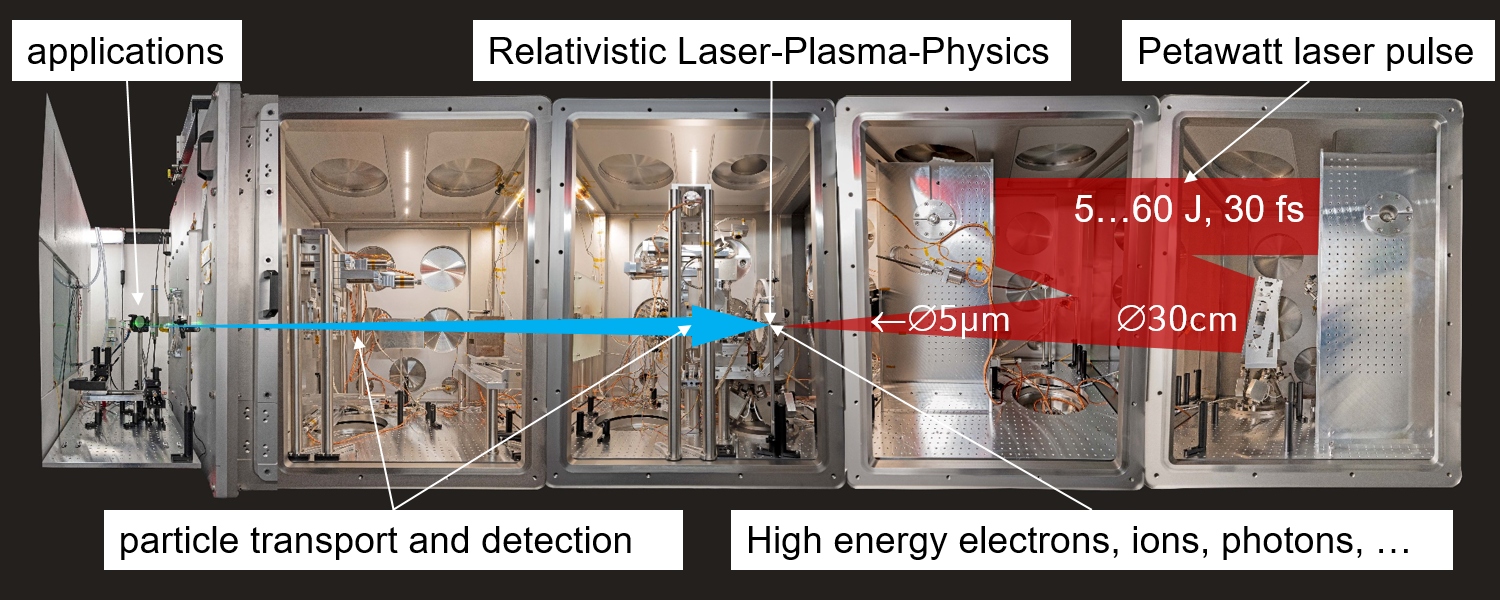
At LMU's Centre for Advanced Laser Applications, we amplify femtosecond laser pulses to exceed 1 petawatt of peak power. Focusing the 30 cm-wide beam onto a 5 µm spot achieves an unprecedented light intensity of 10²² W/cm². This corresponds to an electric field exceeding 10¹⁴ V/m—far beyond many fundamental field strengths in physics. For comparison:
- The electric field binding an electron in hydrogen is ~10¹¹ V/m.
- A field of 10¹² V/m can accelerate a free electron to 70% of the speed of light within half a micron.
- A field of 10¹⁵ V/m can accelerate a proton to 70% of the speed of light within one micron.
- The Schwinger field, which binds virtual electron-positron pairs in the quantum vacuum, reaches 10¹⁸ V/m.
This course explores the rich, complex, and often surprising physics of particle acceleration in relativistic plasmas, with a particular focus on laser-ion (LION) acceleration. We will also discuss real-world applications, including how ultra-short, intense, and mutually synchronous ion, electron, and photon pulses are revolutionizing medical physics research and improve our understanding of interaction of ionizing radiation with matter.
This lecture is designed for Physics Bachelor’s and Master’s students but does not count toward the specialized Medical Physics program.

- Trainer/in: Jörg Schreiber
Im Rahmen des Lehr-Lern-Projekts Sprache und Verhalten sollen interaktiv und in enger Rückkopplung mit der schulischen Praxis Ideen zur konkreten Umsetzung von Unterrichtsbausteinen erarbeitet werden, die für Kinder mit sowohl sprachlichen als auch emotional-sozialen Auffälligkeiten eingesetzt werden können. Ziel ist die Erweiterung des Emotionswortschatzes sowie die Verbesserung emotional-sozialer Fähigkeiten. Innerhalb der vier Blockveranstaltungen wird sowohl theoretisches Wissen zur Wortschatztherapie als auch zu sozial-emotionalen Fähigkeiten vermittelt (1. Sitzung). Anschließend bilden die Blockveranstaltungen den Rahmen, um in Kleingruppen konkrete Materialien zu erarbeiten, die auch direkt in der Praxis erprobt werden. Die Erfahrungen aus der Praxis sollen schließlich in einen Überarbeitungsprozess führen, so dass zum Ende des Semesters Material entstanden ist, dass von Lehrkräften niederschwellig eingesetzt werden kann. |

- Trainer/in: Angelika Bauer
- Trainer/in: Bernhard Bley
- Trainer/in: Daniela Michnay-Stolz
- Trainer/in: Sabine Prepens
- Trainer/in: Joana Wolfsperger
Human-AI Synergy … (& Human-AI Augmentation): Welche Prozesse liegen ihr zugrunde?
Welche Prozessgewinne (Synergien)
und Prozessverluste aus der Gruppenforschung sind
auf
Human-AI Arbeitssysteme übertragbar? Welche greifen
womöglich nicht? Welche
kommen neu hinzu?
Ausgehend von Vaccaro et al. (2024) und einigen weiteren klassischen und neueren Quellen erarbeiten wir in diesem LFP:
-ein
griffiges Konzept des zugrundeliegenden Forschungsgegenstandes
-geeignete
Herangehensweisen zur Beantwortung der o.g. Fragen
-eine
wissenschaftliche Fragestellung zum Thema Human-AI Synergy,
-die
wir auch empirisch bzw. experimentell untersuchen werden.
- Trainer/in: Felix Brodbeck
- Trainer/in: Katharina Kugler
- Trainer/in: Anika Motzkus
- Trainer/in: Ulrike Schaupp
This lunch time seminar, entirely held in English
language, will introduce you to the exciting topic of medical imaging and
radiation treatment in cancer therapy. At the same time, you will learn, how to
critically read and discuss scientific literature and how to prepare and
present a scientific presentation on a topic from this area.
Bring your own lunch for the seminar.
The seminar consists of three blocks: It starts with few introductory lectures,
followed by a set of student seminar talks and closes with a block of student
paper presentations.
The seminar is intended for bachelor students from the 4th semester onward,
interested in medical physics and/or the skills for reviewing, discussing and
presenting scientific content.
In person participation in the topic distribution on April 29th 2025 is mandatory.
Please register on LSF.
- Trainer/in: Jonathan Bortfeldt
- Trainer/in: Georgios Dedes
[s25] Markt- und Wirtschaftsdiagnose & Spezifische Vertiefung MKÖ(L. Christoforakos, A. Krupp) 11161
- Trainer/in: Lara Christoforakos
- Trainer/in: Mara Hofbauer
- Trainer/in: Angelina Krupp
- Trainer/in: Christian Bauer
Termine:
| Termin | Ort | Person | Beginn | |
|---|---|---|---|---|
| Vorlesung | Di, 08:30-10:00 Mi, 10:15-11:45 |
Schellingstr. 3 (S) - S 001 Schellingstr. 3 (S) - S 006 |
Thomas Nagler | 06.05.2025 |
| Übungsgruppe 1 | Mo, 16:15-17:45 | Geschw.-Scholl-Pl. 1 (B) - B 006 | Jana Gauß | 12.05.2025 |
| Übungsgruppe 2 | Do, 12:15-13:45 | Geschw.-Scholl-Pl. 1 (B) - B 006 | Jana Gauß | 08.05.2025 |
| Tutorium | Fr, 12:15-13:45 | Geschw.-Scholl-Pl. 1 (D) - D 209 | Eugen Gorich | TBA |
Einschreibeschlüssel
- Der Einschreibeschlüssel lautet: "linalg2025"
- Trainer/in: Jana Gauß
- Trainer/in: Eugen Gorich
- Trainer/in: Thomas Nagler
- Trainer/in: Claudia Umlauf
- Trainer/in: Ulrike Schaupp
- Trainer/in: Kirsten Ludwig
- Trainer/in: Maximilian Hamann
- Trainer/in: Anette Lang
- Trainer/in: Anna Bayrhof
- Trainer/in: Dana-Kristin Gaigulo
- Trainer/in: Maximilian Hamann
- Trainer/in: Meike Engelhardt
- Trainer/in: Heide Froschauer
- Trainer/in: Peter Zentel
- Trainer/in: Lisa Stockleben
- Trainer/in: Maximilian Hamann
- Trainer/in: Kirsten Ludwig

- Trainer/in: Meike Engelhardt
- Trainer/in: Heide Froschauer
- Trainer/in: Dana-Kristin Gaigulo
- Trainer/in: Sandra Guggenberger
- Trainer/in: Marie Kircher
- Trainer/in: Andreas Mayer
- Trainer/in: Ruth Sarimski
- Trainer/in: Joana Wolfsperger
- Trainer/in: Peter Zentel
- Trainer/in: Manuel Stoiber