Klicken Sie einfach auf "Einschreiben" um Zugang zum Kurs zu bekommen.
- Trainer/in: Johannes Albert
- Trainer/in: Corinna Friedl
- Trainer/in: Ashley Haberman-Lawson
- Trainer/in: Armin Rubner
Kursbereich: eUniversity (allgemein)
Klicken Sie einfach auf "Einschreiben" um Zugang zum Kurs zu bekommen.
| Geplante Themen: SPF-Maushaltung, Klonierung, Mausmutanten in der Nephrologie und psychiatrischen Forschung, Diabetesforschung am Schwein, Genomforschung in der Reproduktionsbiologie, Embryonale Stammzellen, Tiermodelle in der Krebsforschung, Stammzellen in der kardialen Forschung, Immundefiziente Mäuse, Modelle in der Muskeldytrophieforschung, Xenotransplantation, Epigenetik, Mausmodelle für die Kolonkarzinogenese |
Im März blickt man im deutschsprachigen Theater seit nun fast einem halben Jahrhundert nach Mülheim: Welche Stücke werden für den Mai zu den Theatertagen eingeladen? Welche Autor*in gewinnt dort den renommierten Mülheimer Dramatikpreis? Und wer den KinderStückePreis? Im Seminar werden wir uns mit Dramen oder Theatertexten, die in diesem Jahr und in den letzten Jahren in Mülheim zu sehen sind bzw. waren, etwa von Sivan Ben Yishai, Caren Jeß, Ewald Palmetshofer, Tina Müller oder Thomas Melle, auseinandersetzen. Hierbei werden wir die wichtigsten Strukturen des Dramas sowie die Ästhetik des (nicht mehr dramatischen) Theatertextes vorstellen und reflektieren. |
The course is a compulsory prerequisite for a specialization in Innovation. It provides foundations for students who wish to specialize in the topics addressed by the Institutes* organizing this introductory master-level course. Successful participation in this class contributes 9 ECTS toward the fulfillment of the requirements of the M.Sc. curriculum. The course also serves as an introductory course to the IMPRS-CI curriculum.
In this lecture series we will introduce various domestication concepts, summarize the current knowledge as well as shed new light into the history of some of the most important domesticates such as bees, cattle, horses or dogs. By inviting experts in the field we will mainly focus on the information hidden in the archeological record and the genomes of those animals and their respective wild ancestors. Ultimately, we are addressing the when and where or the how and why of domestication and thereby provide a comprehensive overview of how some of the wildest beasts became tamed.
The main goal of this course is to familiarize students with the organometallic approach to the modern organic synthesis. The chemistry of the most used main group organometallics will be discussed: the phenomena of organometallic bonding; structure in solid state, gas phase and solution; general methods of organometallics generation and their practical use for the organic synthesis.
2025 wird das Konzil von Nizäa 1700 Jahre alt. Aber warum beschäftigt das Jahr 325 die Theologie noch heute? Dieser und weiteren Fragen widmet sich das Proseminar.
Wie kommt es dazu, dass Aussagen über Gott verbindlich werden müssen? Wieso will der Kaiser theologische Fragen entscheiden? Was steht eigentlich im Konzilstext? Was ist überhaupt ein Dogma? Wer sind die Gewinner und Verlierer der Debatte? Hat St. Nikolaus wirklich eine Ohrfeige verteilt? Und wie geht es nach Nizäa weiter?
Rund um eines der wichtigsten Ereignisse der frühen Christentumsgeschichte führt das Proseminar in das kirchengeschichtliche Arbeiten ein. Dabei werden die Methoden, Quellen und Hilfsmittel der Kirchengeschichte besprochen mit dem Ziel eine Proseminararbeit zu schreiben.
Zusätzlich zum Proseminar bietet ein Studientag am 25.06. die Möglichkeit sich vertieft mit dem Konzil von Nizäa auseinanderzusetzen.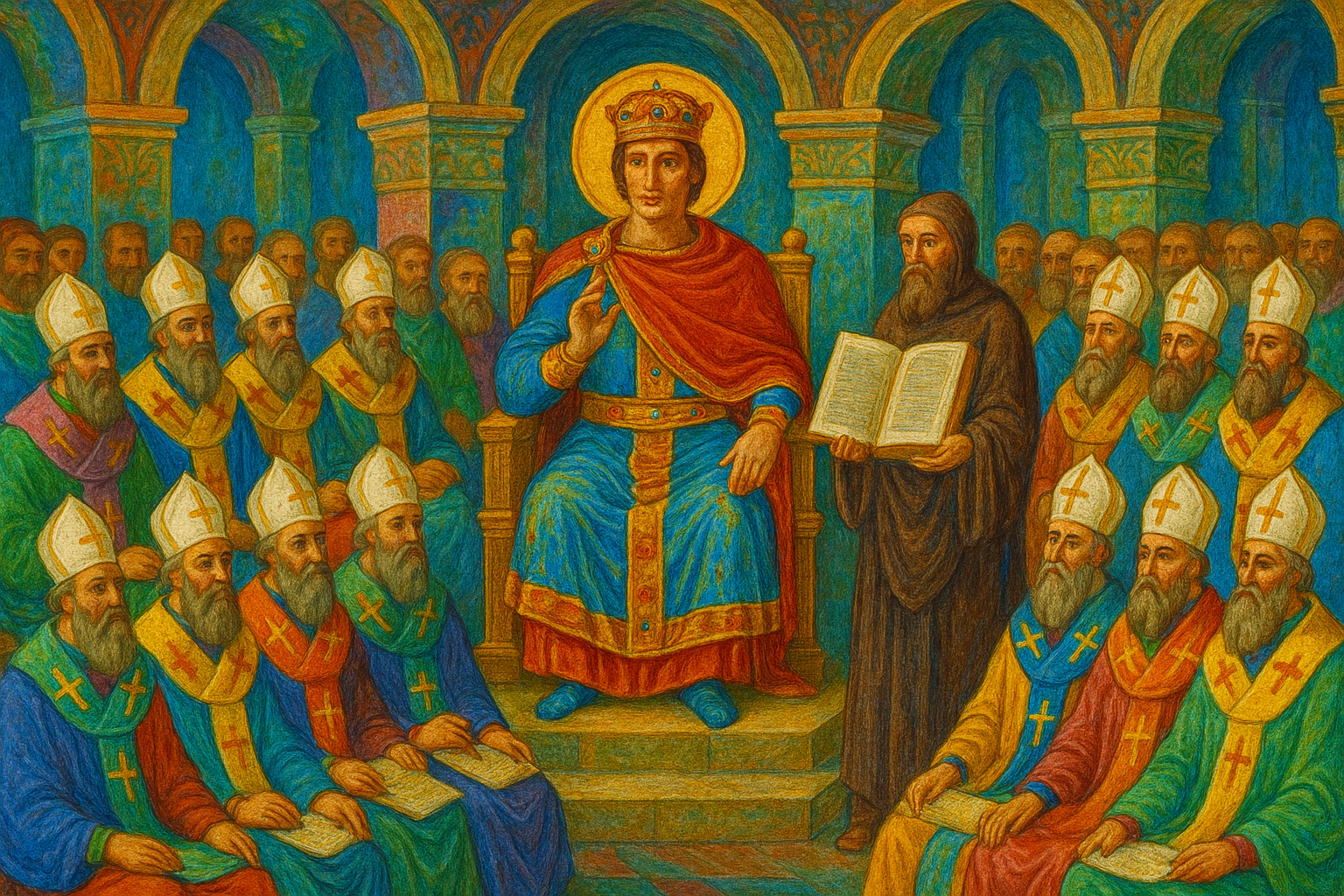
Das erste Buch des CIC/1983 trägt den Titel „Allgemeine Normen“. Der Systematik des Gesetzes folgend befasst sich die Vorlesung mit dessen erstem Block, insbesondere mit den verschiedenen Arten von Rechtsquellen.
As a single phase in literary history, the years between 1660 and the 1830s are marked by an overlapping of seemingly opposed aesthetic tendencies, and by a new relationship between authors, booksellers and readers. The theatrical scene within the United Kingdom of Great Britain as well as abroad was concentrated on just two London playhouses. Initially, their programme pitted Restoration comedies of wit and manners against Roman and heroic tragedies. Over the years, stage satires, sentimental comedies and domestic tragedies were added to the bill. Neoclassicist and Romantic poets alike favoured the forms of verse letters, satires, odes and elegies, yet there occurred also a ballad revival and the return of the sonnet. Major innovations in prose fiction are the children's book as well as the adult novel (of adventure, of character and manners, or of history), yet the more exotic Gothic romance, the literature of travel and the periodical essay are further characteristic features of the period addressed in this survey lecture.
Please choose this class only if you have no other obligations during this time.
Moodle, Zoom and LMUcast are used for the lecture. Course materials are provided in the Moodle room. All access data will be sent to your campus mail in the week before the course starts.
Workload: Participants should expect to set aside an additional 60 to 90 minutes per week for a completion of their lecture notes, and for the preparation of next week's lecture.
Accompanying study book:
Nowak, Helge. 2010. Literature in Britain and Ireland: A History. UTB 3148. Tübingen: Francke.
Useful anthologies for further reading:
Greenblatt, Stephen, and M.H. Abrams, eds. The Norton Anthology of English Literature. 10th, rev. ed. in 6 vols. New York: Norton, 2018.
Damrosch, David, ed. The Longman Anthology of British Literature. 3rd, rev. ed. 2 vols. New York: Longman, 2006.
Rosengarten, Herbert, and Amanda Goldrick-Jones, eds. The Broadview Anthology of Poetry. 2nd, rev. ed. Peterborough, Ont.: Broadview Press, 2008.
Prüfungsform: Klausur (60 Min.) in Präsenz
 Di., 14–16 Uhr (PHP 2, V 005)
Florian Sgonina
 Di., 13–15 Uhr (GSP 1, D Z001)
Leonard Lusznat, LL.M. (Edinburgh)
 Di., 16–18 Uhr (PHP 2, W 201)
Louisa Zachmann
 Di., 16–18 Uhr (GSP 1, D Z005)
Noah-Luca Räderer
 Di., 15–17 Uhr (GSP 1, D Z005)
Philipp Sandmann
 Di., 16–18 Uhr (Ludwig 29, 409)
Lisa-Marie Vollrath
 Di., 18–20 Uhr (PHP 2, V 005)
Oskar Palus
 Di., 18–20 Uhr (GSP 1, D Z003)
Marie Muderlak
 Di., 18–20 Uhr (Ludwig 28, 122)
Marie-Teresa Kratzer
 Di., 18–20 Uhr (online)
Dr. Nicolai von Maltitz
 Di., 15–17 Uhr (Schelling 3, Rgb 209)
Dr. Azur Coulmas
 Mi., 09–11 Uhr (PHP 2, V 005)
Jana Hey
 Mi., 09–11 Uhr (GSP 1, D Z003)
Philipp Sandmann
 Mi., 09–11 Uhr (PHP 2, V U104)
Aron Johanson
 Di., 13–15 Uhr (GSP 1, D Z003)
Mathias Scheer
 Di., 14–16 Uhr (GSP 1, D Z003)
Luca Kochendörfer
 Mi., 09–11 Uhr (PHP 2, W 201)
Paul Froer
 Mi., 09–11 Uhr (GSP 1, D Z005)
Broder Ernst
 Di., 17–19 Uhr (GSP 1, D Z007)
Philipp Sandmann
 Mi., 09–11 Uhr (Ludwig 29, 409)
Simon Meier
 Mi., 11–13 Uhr (PHP 2, V 005)
Dr. Lucie Antoine
 Mi., 11–13 Uhr (GSP 1, D Z003)
Philipp Sandmann
 Di.,
Di.,  Di.,
Di.,  Di.,
Di.,  Di.,
Di.,  Di.,
Di.,  Di.,
Di.,  Di.,
Di.,  Di.,
Di.,  Di.,
Di.,  Di.,
Di.,  Di.,
Di.,  Di.,
Di.,